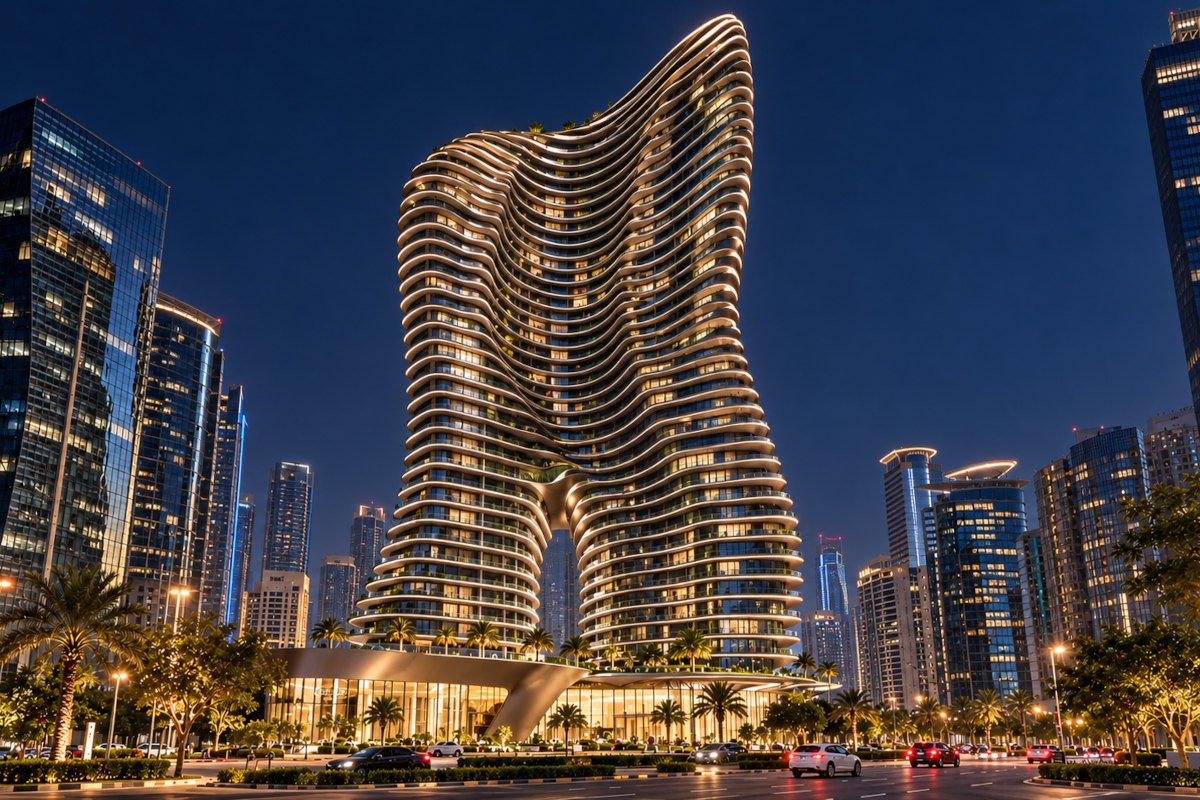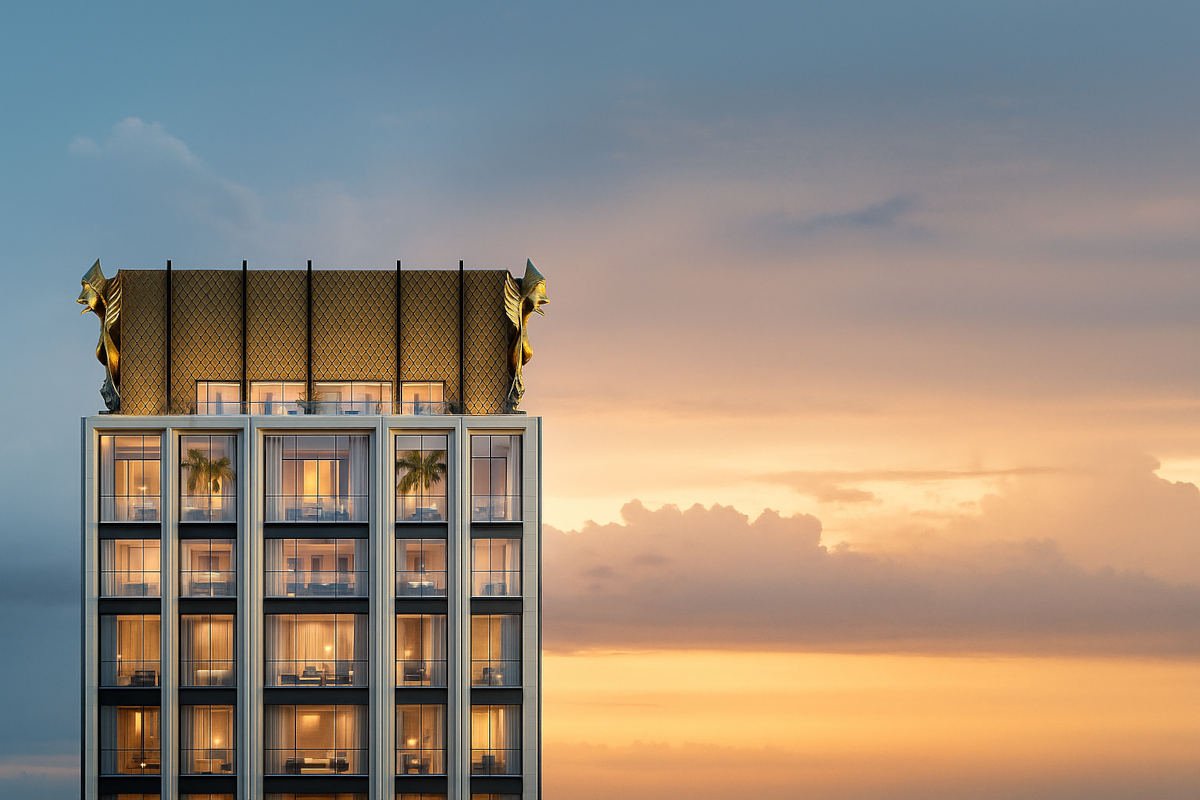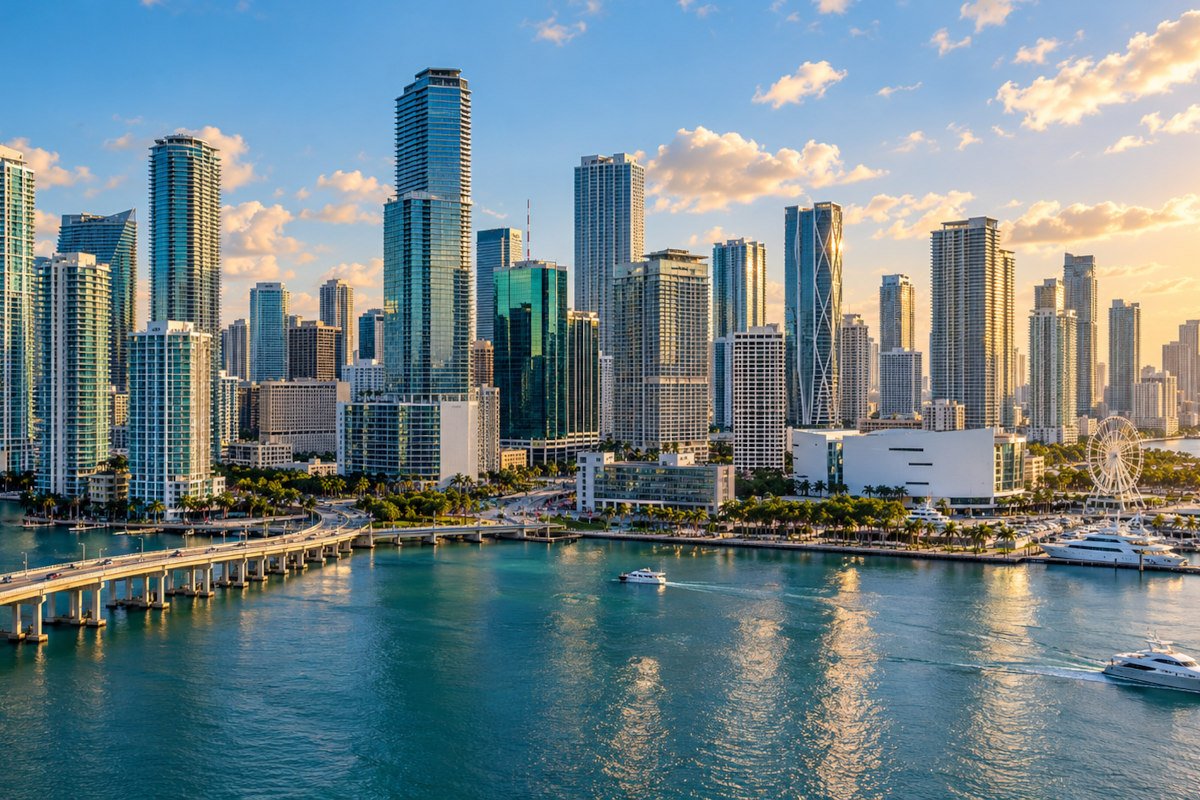
Miami is starting to look less like a traditional American resort city and more like a global luxury capital being built upward in real time. Across Brickell, Downtown Miami, Edgewater, Miami Beach, and the waterfront corridors connecting them, cranes, supertalls, branded residences, five-star hotels, private clubs, marinas, and mixed-use towers are reshaping both the skyline and the city’s identity.
The comparison increasingly made is with Dubai. It is not exact. Miami is older, more regulated, more constrained by land, insurance, infrastructure, and U.S. development rules. But the underlying development model is becoming strikingly familiar: attract global wealth, build iconic towers, attach luxury brands to real estate, combine residences with hospitality and lifestyle infrastructure, and turn the skyline itself into part of the destination.
That shift is no longer anecdotal. According to the Miami Downtown Development Authority, Greater Downtown Miami now has more than 101,000 residents, up nearly 68% from 2012, along with more than 30 active construction projects and more than 200 residential buildings. The downtown area also supports around 155,000 jobs, with job growth of roughly 25% between 2012 and 2023.
From Beach City to High-Rise Capital
For decades, Miami’s global image was dominated by beaches, nightlife, Art Deco hotels, boating, and second homes. Those elements are still central, but the city is now layering a far more vertical and metropolitan identity on top of them.
Brickell has become the clearest expression of that change. Once viewed primarily as a banking district, it has evolved into a dense residential and lifestyle core with luxury towers, restaurants, private clubs, hotels, offices, and some of the most ambitious branded residential projects in the United States.
The transformation is visible in both scale and ambition. Miami is no longer adding only 40- or 50-story luxury towers. It is moving decisively into the 1,000-foot skyscraper era.
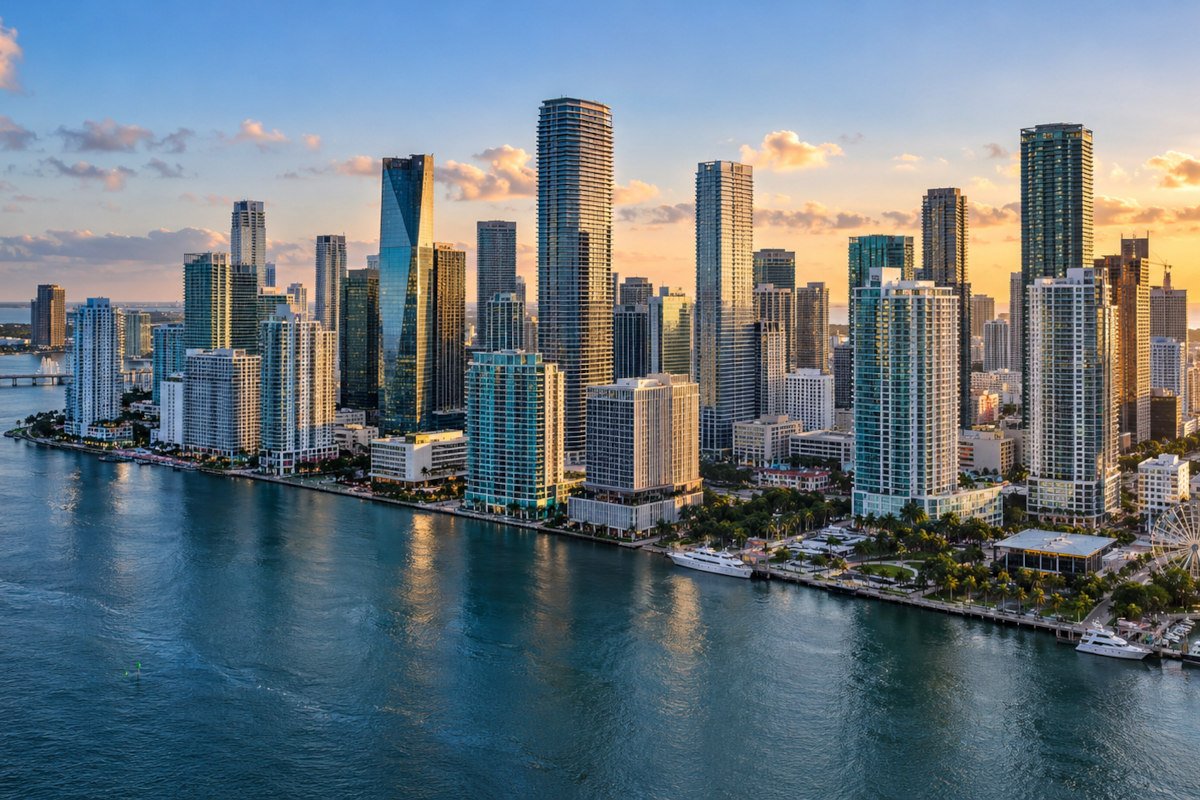
Miami Is Entering the Supertall Era
One of the clearest signs of Miami’s changing ambitions is the arrival of towers around the 1,000-foot mark.
Waldorf Astoria Residences Miami is planned to rise 1,049 feet across 100 stories in Downtown Miami, combining a Waldorf Astoria hotel with branded residences. Its stacked-cube design is intended to become one of the city’s defining architectural landmarks.
In Brickell, 888 Brickell by Dolce & Gabbana is also planned at 1,049 feet, pushing Miami into a height category historically associated with cities such as New York, Chicago, Dubai, Shanghai, and Hong Kong. Premier Possible has covered the project in detail in 888 Brickell: Miami’s First Supertall by Dolce & Gabbana.
Even completed towers are changing the baseline. The Council on Vertical Urbanism lists One Brickell City Centre at approximately 1,040 feet, reinforcing the broader shift toward supertall mixed-use development in the urban core.
The Dubai Comparison Is Becoming Harder to Ignore
Dubai and Miami developed under very different political, economic, and planning systems, but their luxury-growth strategies increasingly overlap.
Both cities sell a combination of:
- Waterfront living
- Global air connectivity
- Luxury hospitality
- High-rise residential towers
- International buyers
- Yachting and marina culture
- Tax advantages relative to competing cities
- Branded residences
- Year-round lifestyle infrastructure
- A skyline used as part of the city’s global identity
Savills’ Branded Residences Annual Report 2025–2026 provides perhaps the clearest numerical comparison. Dubai ranks first globally with 64 completed branded-residence schemes and 87 in the pipeline. South Florida, driven largely by Miami and Fort Lauderdale, ranks second with 48 completed and 55 in the pipeline.
That places South Florida remarkably close to Dubai in one of the fastest-growing segments of global luxury real estate.
Branded Residences Are Becoming Part of Miami’s DNA
Miami has become a laboratory for branded real estate.
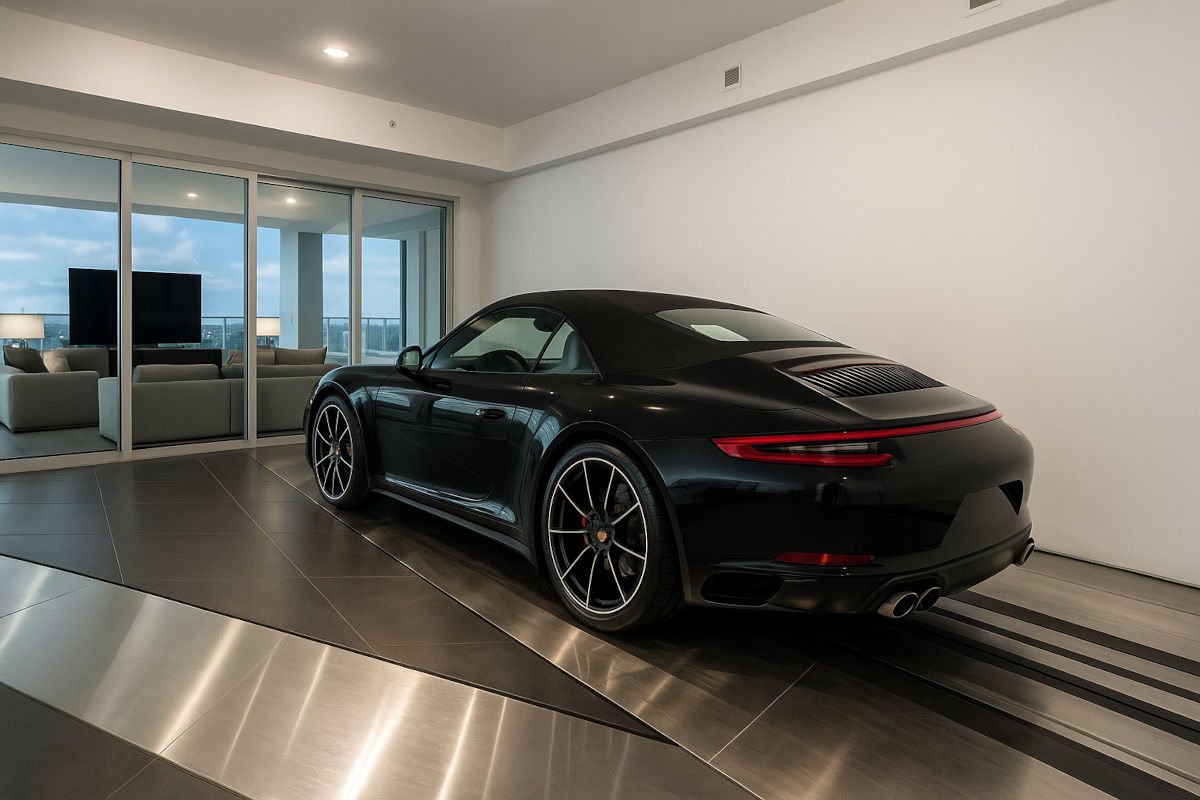
Hospitality names, fashion houses, automotive brands, restaurants, and luxury maisons are increasingly moving from licensing products to shaping entire residential buildings. The result is a market where the brand is no longer merely attached to the lobby—it influences the architecture, interiors, service model, amenity package, and resale identity of the property.
Premier Possible explored this shift more broadly in Branded Residences: The New Standard of Luxury Real Estate. Miami has since become one of the strongest examples of that trend in practice.
Knight Frank’s Residence Report 2026 now describes Miami as the world’s second-largest branded-residence market, with brands from hospitality, automotive, and restaurant sectors continuing to enter the city.
Baccarat, Dolce & Gabbana, Mercedes-Benz and Cipriani
The current development pipeline shows how diverse the branding model has become.
Baccarat Residences Miami translates a historic French crystal maison into a 75-story waterfront residential experience with hotel-style service, a private marina, spa, dining, and beach-club privileges.
888 Brickell by Dolce & Gabbana takes a fashion-led approach, turning the Italian house’s visual identity into a supertall mixed-use tower.
Mercedes-Benz Places Miami brings an automotive design philosophy into a major Brickell development combining residences, hospitality, office space, wellness, and a redesigned public park.
Meanwhile, Cipriani Residences Miami has reached vertical completion and is targeting occupancy in 2027. The project rises 85 stories and centers its identity around the Cipriani family’s hospitality legacy.
These projects demonstrate why Miami increasingly resembles Dubai: luxury brands are not simply opening stores in the city—they are becoming permanent parts of the skyline.
Wealth Migration Is Fueling the Transformation
Skyscrapers require buyers, and Miami’s growth is closely tied to the movement of wealth.
Henley & Partners’ World’s Wealthiest Cities Report 2025, using New World Wealth data, estimated that Miami had around 38,800 resident millionaires. More strikingly, its millionaire population grew by approximately 94% between 2014 and 2024.
Henley’s U.S. wealth analysis attributes much of Miami’s appeal to Florida’s tax structure, international connectivity, its role as the U.S. gateway to Latin America, and the relocation of wealthy individuals from sectors including finance, technology, media, and entertainment.
This fits a global trend Premier Possible discussed in HNWIs Buying Abroad in 2025: The Golden Visa Effect: wealthy buyers are increasingly treating property as part of a wider strategy involving mobility, taxation, lifestyle, education, and capital preservation.
Miami Is Becoming a Base, Not Just a Second-Home Market
One of the most important changes is that Miami is increasingly becoming a primary or semi-primary base for wealthy residents rather than simply a place for winter apartments.
The Miami DDA reports more than 101,000 residents in Greater Downtown Miami, with downtown population growth accounting for a substantial share of the city’s overall expansion. Median downtown household income is around $119,000, while the area has also experienced strong job growth.
This matters because sustainable high-rise development requires more than investors buying empty units. It requires residents, offices, schools, restaurants, healthcare, transit, parks, and daily economic activity.
The pattern also overlaps with the rise of location-flexible affluent professionals described in Premier Possible’s Wealth and Wanderlust: The New Era of Luxury Digital Nomads. Miami offers a combination of global connectivity, warm climate, finance, technology, international schools, hospitality, and lifestyle that makes extended residence increasingly practical for people whose work is not tied to a single city.
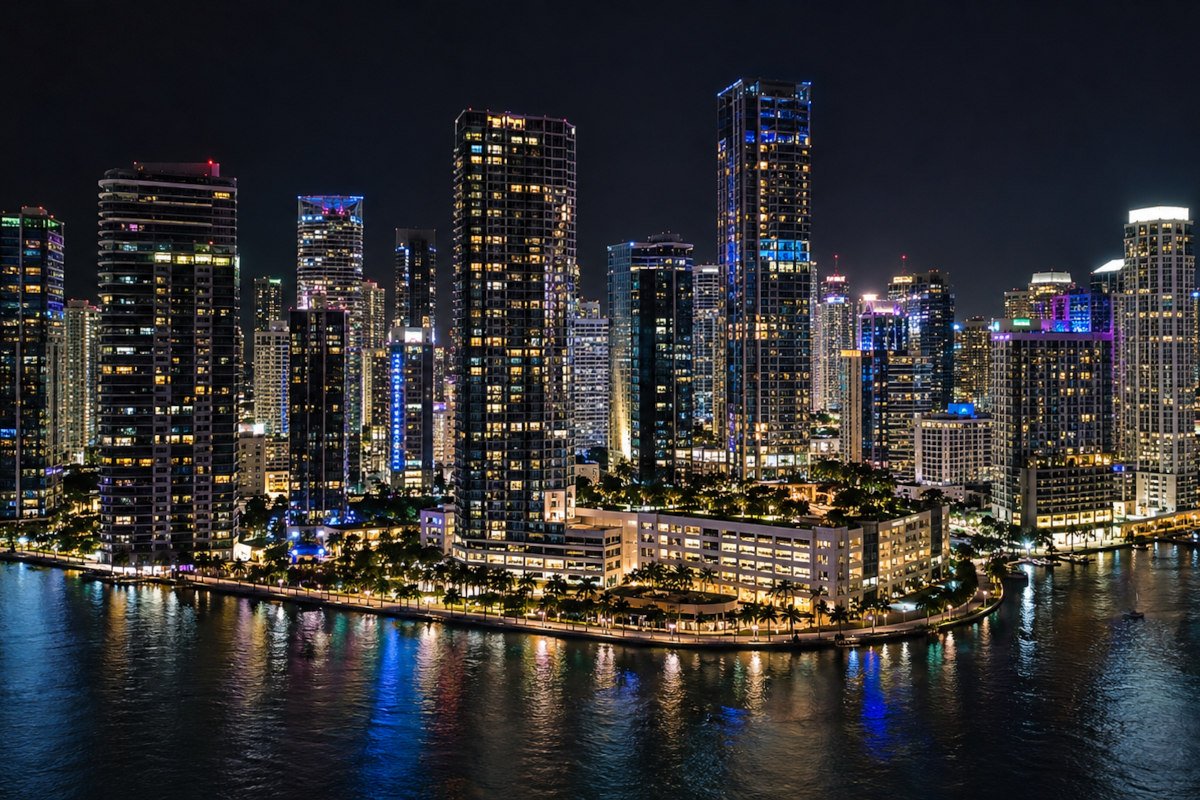
The City’s Luxury Prices Have Already Repriced Dramatically
The physical transformation of Miami has been matched by a major repricing of prime property.
Knight Frank reported that prime residential values in Miami rose approximately 84% over the five years leading into 2025. The firm’s 2026 global prime-residential analysis notes that Miami prices softened slightly after that extraordinary run, while emphasizing the scale of the appreciation since 2021.
This is another area where the Dubai comparison becomes relevant. Knight Frank’s global data shows Dubai leading prime-market repricing over the same broad period, but Miami also ranks among the standout global growth markets.
Rapid appreciation, however, creates a more demanding environment for new projects. Buyers are no longer entering at the relatively low prices of a decade ago. Developers must increasingly justify premiums through design, service, location, brand value, and amenity depth.
The New Luxury Product Is More Than an Apartment
Miami’s newest developments increasingly sell a full operating environment rather than a residence alone.
Projects now compete through combinations of:
- Private restaurants and bars
- Hotel-style concierge and housekeeping
- Valet and chauffeur services
- Spas and wellness clubs
- Private dining rooms
- Wine cellars
- Screening rooms
- Marinas and yacht access
- Beach-club privileges
- Co-working and business facilities
- Private clubs and residents’ lounges
This reflects a broader change in high-end buyer expectations. Knight Frank’s 2026 wealth research notes a renewed premium on turnkey and managed residences, as affluent buyers increasingly seek service-rich homes that reduce the friction of ownership.
Brickell Is Becoming Miami’s Version of a Global Downtown
Brickell is central to the transformation because it compresses many of Miami’s growth themes into one relatively small district.
It combines finance, restaurants, luxury retail, condos, hotels, transit, offices, marinas, and nightlife. New developments are also becoming more mixed-use, combining residential units with hotels, offices, wellness spaces, parks, and public-realm improvements.
That is another similarity with Dubai’s strongest districts. The most successful luxury towers are rarely isolated buildings; they sit inside larger lifestyle ecosystems.
Miami Still Faces Constraints Dubai Does Not
The similarities should not obscure the differences.
Miami’s development boom operates within a mature U.S. legal and financing system. Developers face high construction costs, stricter zoning, lengthy approvals, hurricane standards, insurance costs, condominium regulations, and limited waterfront land.
Climate exposure is also impossible to ignore. Sea-level rise, storm surge, flooding, and increasingly expensive insurance are material considerations for buyers and developers.
Those constraints may ultimately limit the pace of construction compared with Dubai, where major new districts can be planned at a scale and speed that is difficult to replicate in an established American city.
Luxury Growth Also Creates an Affordability Divide
There is another tension beneath the glamour: the more successful Miami becomes as a global wealth destination, the harder it can become for ordinary residents to compete for housing.
Luxury towers, global buyers, and wealth migration support investment and tax revenue, but they can also intensify land values, rents, and development costs. Miami’s evolution therefore contains two parallel stories: one of extraordinary global demand, and another of increasing affordability pressure.
This is important because a city cannot function only as a collection of trophy towers. The long-term success of Downtown Miami and Brickell will depend on whether infrastructure, workforce housing, mobility, public space, and services can keep pace with luxury development.
Could Miami Become the Dubai of the Americas?
Miami is unlikely to become a direct replica of Dubai—and that may be precisely why the comparison is useful.
Dubai built a global luxury city at extraordinary speed through masterplanning, infrastructure, aviation, tourism, and large-scale development. Miami is moving toward some of the same outcomes through a different route: private development, global capital, domestic migration, international buyers, branded residences, and the gradual densification of an existing city.
The overlap is already visible. Both cities attract globally mobile wealth. Both use waterfront living as a core luxury proposition. Both have become major branded-residence markets. Both are building taller. Both are turning hospitality brands into residential products. And in both cities, the skyline has become part of the sales pitch.
What makes Miami especially interesting is that this transformation is still unfolding. Many of the towers that may define its next skyline are either under construction or still approaching completion.
The Next Miami Will Be Taller, More Branded and More Global
Miami’s rise is no longer simply a story about wealthy buyers moving to Florida. It is becoming a structural transformation of the city itself.
Population growth is supporting downtown density. Wealth migration is creating demand. Luxury brands are entering real estate. Hospitality is merging with private ownership. Developers are pushing past the 1,000-foot barrier. Brickell is becoming a more complete urban district. And South Florida now sits directly behind Dubai in the global branded-residence rankings.
There are real risks—insurance, climate exposure, affordability, construction costs, and the possibility that too many premium projects compete for the same buyer. But the direction is difficult to miss.
Miami is becoming less defined by the image of a beachfront escape and more by the image of a vertical, international, high-service city. If the current pipeline is delivered successfully, the skyline of the early 2030s may look dramatically different from the Miami of only a decade earlier.
That is the real Dubai comparison: not that Miami will become Dubai, but that it is increasingly using architecture, lifestyle, global capital, and luxury real estate as tools of city-building.