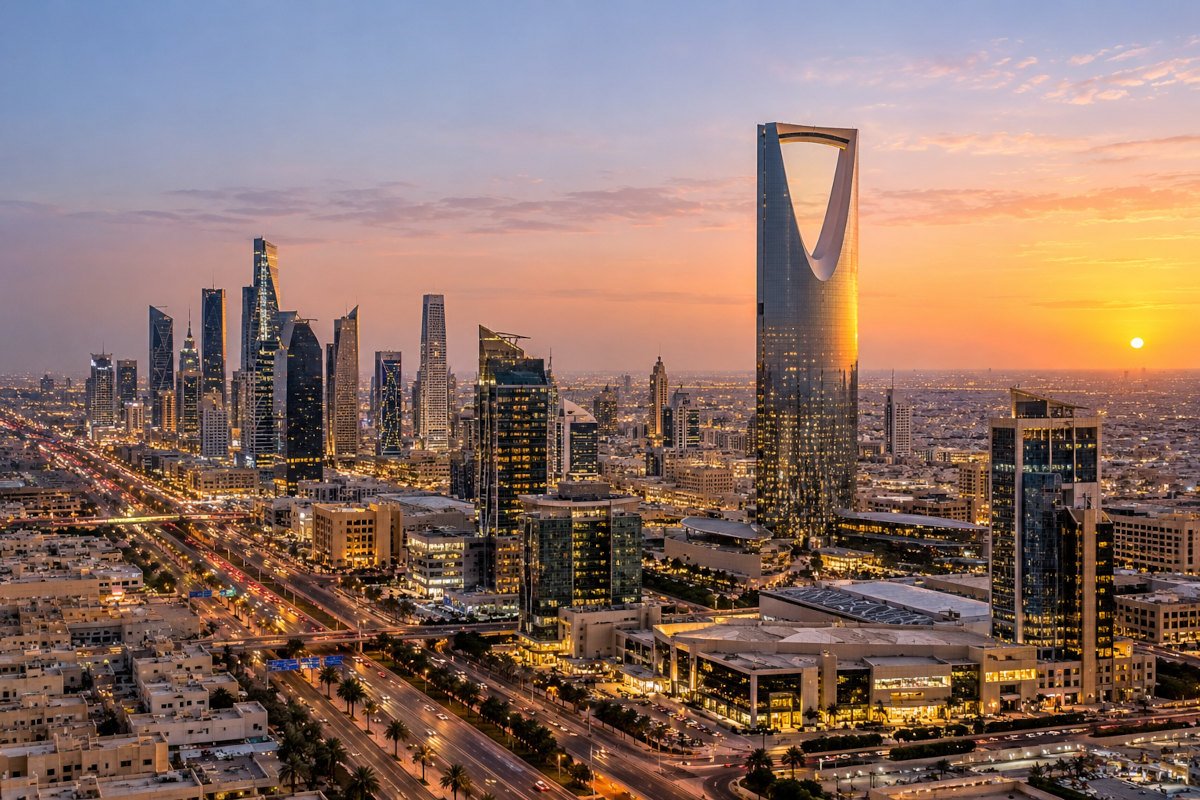
Saudi Arabia’s property market entered 2026 with a change that would have been difficult to imagine only a few years ago: non-Saudi individuals, companies, and entities can now acquire real estate under a new nationwide ownership framework. The law took effect on 22 January 2026, opening designated parts of the Kingdom to international buyers while retaining specific controls over where, how, and by whom property can be owned.
The timing is significant. Saudi Arabia is simultaneously expanding housing supply, reshaping its major cities, attracting international companies, and trying to keep home ownership within reach of Saudi households. That means foreign ownership is arriving not into a simple boom, but into a market that is becoming more segmented and more sensitive to affordability.
For international buyers, the headline is therefore bigger than “foreigners can now buy.” The more important question is what can be bought, where ownership is permitted, which restrictions still apply, and how the new demand interacts with a residential market that is already adjusting.
What Changed in January 2026?
Saudi Arabia’s updated Law of Real Estate Ownership by Non-Saudis created a new framework for property ownership by foreign individuals and entities. Rather than applying one blanket rule across the entire country, the system is built around designated geographical zones, ownership limits, permitted real-estate rights, and other controls set by the authorities.
The Real Estate General Authority (REGA) confirmed that the system entered into force on 22 January 2026. Applications are handled through the official Saudi Properties platform, with different procedures for residents, non-residents, and foreign companies.
For non-residents, the process begins with obtaining a digital identity through Saudi diplomatic missions before completing the ownership application online. Foreign companies without an existing presence in the Kingdom must first register through the Ministry of Investment and obtain the required unified identification before proceeding.
This matters because the reform is not merely theoretical legislation. There is now a digital application route tied directly to Saudi Arabia’s real-estate registration system, which gives the policy an operational structure rather than leaving prospective buyers waiting for a future mechanism.
Ownership Is Broader — But It Is Not Unrestricted
The new law permits non-Saudis to own real estate or acquire other real rights within geographical areas approved under the regulatory framework. REGA’s Saudi Properties service now provides access to the geographical ownership zones and related controls, including permitted ownership percentages and the types or durations of real-estate rights available in specific areas.
There are several distinctions international buyers should understand.
Residents can have an additional residential route
A non-Saudi individual who is legally resident in Saudi Arabia may, under the law, own one property for personal residential use outside the designated geographical zones, subject to the implementing rules. Makkah and Madinah are excluded from this particular provision.
Makkah and Madinah remain special cases
For natural persons, ownership rights in the two holy cities are restricted to Muslim individuals. The framework also treats qualifying companies differently, meaning buyers should not assume that rules applying in Riyadh or Jeddah automatically carry over to Makkah or Madinah.
The geographical map matters as much as the national law
The law establishes the right to own within approved areas, but the practical answer to “can I buy this property?” depends on the specific geographical zone and the controls attached to it. REGA directs prospective buyers to the official Saudi Properties ownership service, which provides the designated zones and ownership parameters.
That makes due diligence especially important. A buyer evaluating a new-build apartment, branded residence, villa, or commercial asset should verify the exact property against the current official zone data rather than relying on a developer’s general claim that “foreigners can buy in Saudi Arabia.”
Why Saudi Arabia Is Opening the Market Now
The reform fits into a much larger transformation of the Kingdom’s urban and investment landscape. Riyadh is expanding rapidly, Jeddah is attracting major waterfront and mixed-use investment, tourism projects are creating new hospitality markets, and Vision 2030 has pushed real estate far beyond the traditional role of housing and land.
REGA says the foreign-ownership framework is intended to help attract international developers and investment while supporting residential, commercial, industrial, and tourism development. The policy therefore targets both end buyers and the capital needed to deliver new projects.
That combination is particularly relevant to the luxury and branded-residence market. Knight Frank’s Destination Saudi 2026 research identified approximately US$3.4 billion in global private capital interested in Saudi branded residences, while 77% of the high-net-worth individuals surveyed expressed an interest in purchasing a branded home in the Kingdom.
This connects directly with the broader shift Premier Possible has previously explored in branded residences: wealthy international buyers are increasingly looking for property that combines ownership with hospitality services, recognizable brands, managed amenities, and turnkey use. Saudi Arabia is building precisely the type of large-scale tourism and lifestyle destinations where that model can expand quickly.
Foreign Demand Is Arriving During a Market Recalibration
The ownership reform could easily be interpreted as a simple catalyst for higher prices. Current market data suggests the reality is more complicated.
Saudi Arabia’s residential market experienced a sharp slowdown in early 2026. Knight Frank reported that national residential transaction volumes fell by 50% year-on-year in Q1 2026, while transaction values declined by 57%. Riyadh saw the most severe contraction during that quarter.
By Q2, conditions were more mixed. Knight Frank’s latest residential review showed Riyadh recording 10,667 residential transactions, only 2% lower than a year earlier but 23% higher than in Q1. Transaction values reached SAR 14.3 billion, down 14% year-on-year but 8% higher quarter-on-quarter.
Jeddah told a different story: transaction volumes were down only 1% year-on-year, while the total value of transactions increased 31% to SAR 10.3 billion. The Dammam Metropolitan Area recorded year-on-year increases in both transaction volumes and values.
The result is not a single national direction. Saudi residential property is increasingly behaving as a collection of local markets and buyer segments, with affordability, supply, infrastructure, employment growth, and location producing different outcomes from city to city.
Affordability May Be the Most Important Constraint
JLL’s Q1 2026 Saudi living-market analysis described the residential sector as moving away from speculative price growth toward more stable, demand-driven conditions. It also highlighted affordability as an increasingly important factor in buyer decisions across Riyadh, Jeddah, and the Dammam Metropolitan Area.
That creates an interesting tension. Saudi Arabia wants to attract foreign investment, but it is also working to expand domestic home ownership and housing supply. If international demand becomes concentrated in the same neighborhoods and product types sought by local households, policymakers may face pressure to balance investment appeal against affordability.
The geographical-zone system appears designed partly to manage that tension. Instead of opening every neighborhood without limits, the framework allows ownership percentages, rights, durations, and local controls to vary by area.
For developers, this could encourage more deliberate product segmentation: international-investor projects in some districts, owner-occupier housing in others, and premium hospitality-linked residences in destination markets.
Riyadh: The Obvious International Entry Point — With a Price Problem
Riyadh remains the most obvious destination for many foreign buyers because it combines government, corporate headquarters, population growth, infrastructure investment, and a rapidly expanding professional workforce.
Knight Frank’s 2026 research found Riyadh to be the most popular Saudi residential target among the international investors it surveyed. At the same time, however, the consultancy has repeatedly highlighted an affordability mismatch between buyer expectations and current pricing.
That is important for international purchasers. A market can have strong long-term demand while still be expensive relative to what buyers expect to receive for their budget. Foreign ownership may improve liquidity and broaden the buyer pool, but it does not automatically make every project attractive at every price.
The more useful question is likely to become: which Riyadh districts offer the combination of eligibility, quality, connectivity, realistic pricing, and long-term demand?
Jeddah Could Offer a Different Investment Story
Jeddah’s position is different. It is Saudi Arabia’s Red Sea gateway, with major tourism, waterfront, hospitality, and mixed-use projects reshaping its urban identity. Current transaction data also suggests that the city’s residential market is not following Riyadh in lockstep.
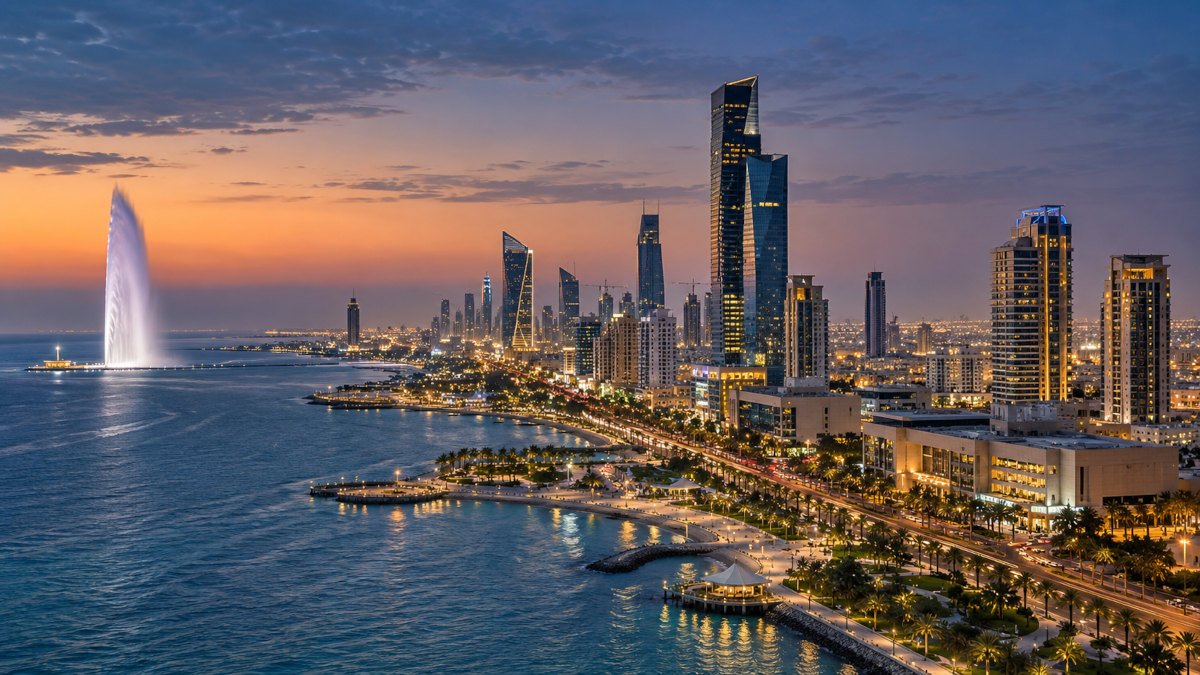
The 31% year-on-year rise in transaction value during Q2 2026, despite broadly flat transaction volumes, indicates that higher-value deals are playing a larger role in the market. That does not prove a broad price boom, but it does make Jeddah particularly relevant for investors watching premium residential and hospitality-linked opportunities.
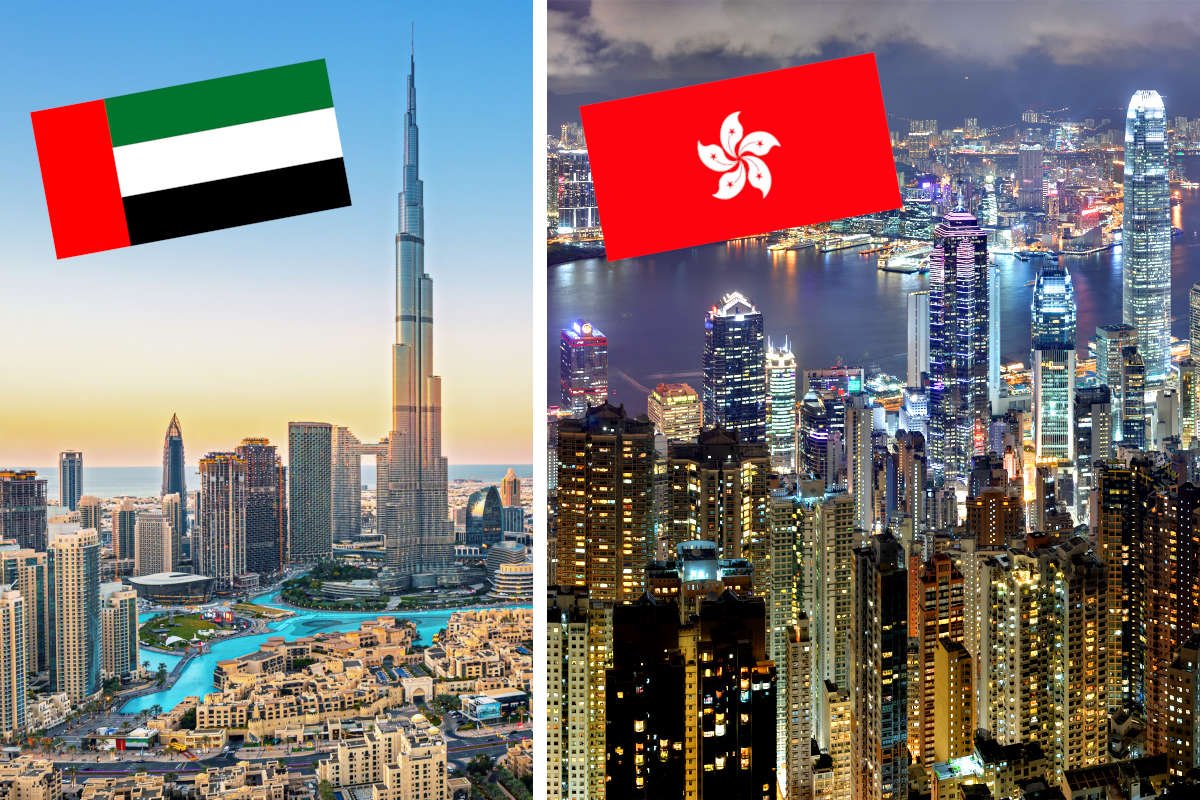
For international buyers already familiar with Dubai’s evolution from regional business center to global property destination, Jeddah may be one of the Saudi markets worth watching most closely. The trajectory will not be identical, but the combination of coastline, tourism investment, major infrastructure, and high-end development creates a recognizable pattern.
Branded Residences May Become One of the Biggest Beneficiaries
Saudi Arabia’s new ownership rules arrive while the global branded-residence sector is already expanding. The Kingdom has an additional advantage: many of its most visible new destinations are being planned from the ground up with five-star hospitality, luxury retail, leisure, wellness, and international brands integrated into the masterplan.
Knight Frank estimates that Saudi Arabia currently has a relatively small branded-residential stock but a growing pipeline. For developers, international ownership expands the addressable market beyond domestic buyers. For global investors, it creates access to projects that may combine personal use, professional management, hospitality services, and potential rental programs.
This is closely connected with another trend Premier Possible has covered: high-net-worth individuals increasingly using international property as part of a broader mobility and lifestyle strategy. Saudi Arabia does not need to copy the residency-by-investment models of other countries for its property market to benefit from the same globally mobile buyer base.
What International Buyers Should Check Before Purchasing
The new framework makes Saudi ownership more accessible, but it also increases the importance of property-specific verification. Before committing capital, a non-Saudi buyer should confirm at least the following:
- Geographical eligibility: verify that the exact property lies within an area where the intended ownership right is permitted.
- Buyer eligibility: confirm whether the rules differ for residents, non-residents, companies, or buyers in Makkah and Madinah.
- Title and registration: verify title status and complete ownership through the official registration process.
- Developer and delivery risk: review the developer, project approvals, construction status, handover terms, and escrow arrangements where applicable.
- Service and ownership costs: understand recurring service charges, community fees, management costs, and any transaction-related government charges.
- Rental assumptions: do not treat projected rental yields as guaranteed; compare realistic occupancy, competition, operating costs, and management terms.
- Exit liquidity: assess who the likely future buyer will be and whether resale demand is broad or dependent on a narrow international segment.
Legal and tax treatment can also depend on the buyer’s structure and circumstances. International purchasers should treat online guides as a starting point and obtain current professional advice before completing a transaction.
Opening the Door Does Not Remove Market Risk
The significance of Saudi Arabia’s 2026 law is difficult to overstate: an international buyer base that previously faced much narrower access can now participate through a formal ownership system in designated areas across the Kingdom.
But the most interesting part of the story is that the reform is arriving during a period of market normalization rather than uninterrupted acceleration. Riyadh is confronting affordability pressure. Jeddah and Dammam are behaving differently. New supply is expanding. Developers are adjusting. At the same time, substantial international capital is showing interest in residential and branded property.
That combination may ultimately be healthier than opening the market at the peak of a speculative cycle. Foreign buyers are entering a market where pricing, product quality, location, regulation, and genuine end-user demand are becoming more important than simple momentum.
For Saudi Arabia, the next phase will be less about whether international buyers are permitted to participate and more about which projects can convert that new access into sustainable demand. For investors, the opportunity is real — but so is the need to distinguish between a landmark regulatory change and a guaranteed investment return.