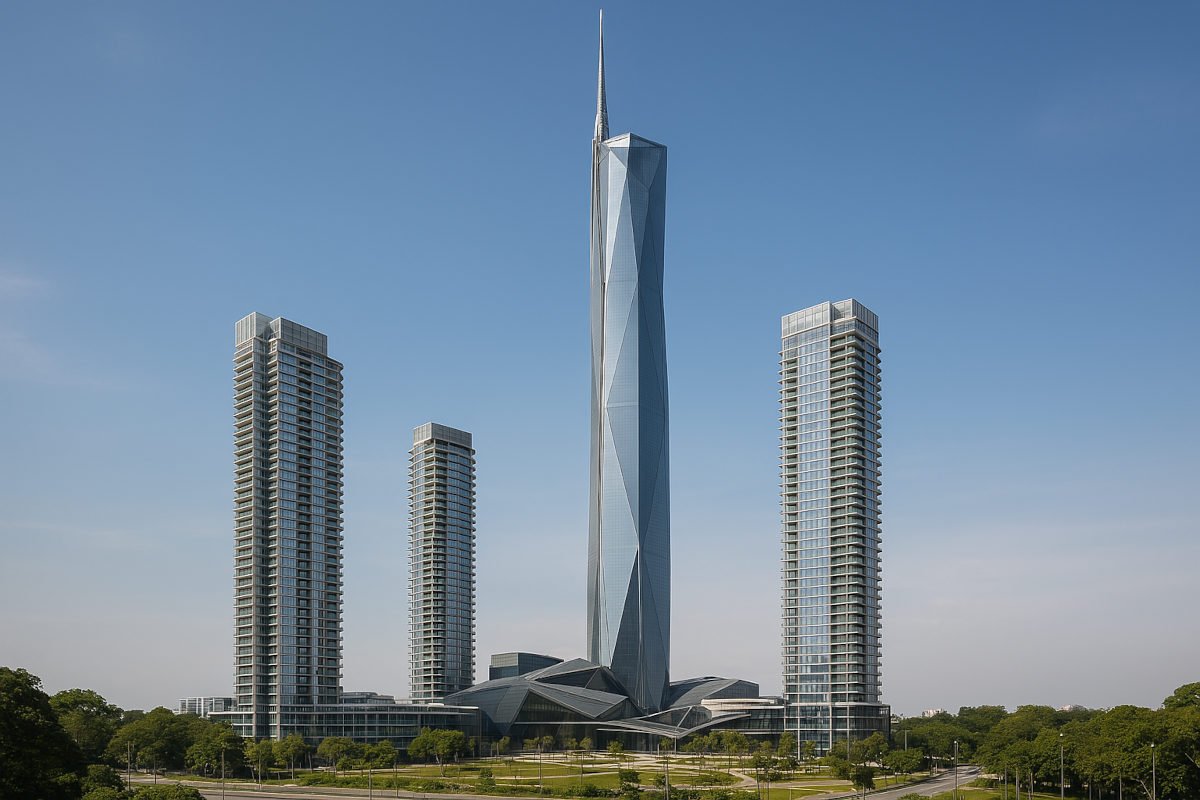
The Bangkok condominium market is navigating one of its most turbulent periods in recent history. What began as a classic case of real estate oversupply has now escalated into a full-blown crisis—worsened by a deadly earthquake, shifting buyer sentiment, and waning foreign interest. With over 235,000 unsold residential units in the Greater Bangkok Area and a sharp dip in both sales and transfers, the Thai capital is witnessing a market correction that could reshape its skyline and investment landscape for years to come.
Too Much, Too Fast: Developer Errors in a Saturated Market
According to Knight Frank Thailand’s 2025 Real Estate Trends Report, Bangkok’s condominium and office sectors are facing a prolonged glut, as developers continued to build despite signals of softening demand. The oversupply is especially prominent in the high-rise segment, where inventory has outpaced demand for several years.
Data from the Bangkok Post shows that condo sales dropped by 37% in 2024, while the total inventory of unsold units in Greater Bangkok surged to levels not seen since 2018. Much of this stock remains in completed buildings, forcing developers to offer heavy discounts, incentives, and even “buy-one-get-one” promotions—none of which have significantly revitalized the market.
Seismic Shock: Earthquake Accelerates Decline
The already shaky market was further destabilized by the 7.7 magnitude earthquake that struck neighboring Myanmar on March 28, 2025. The tremor—one of the strongest recorded in the region—sent shockwaves through Bangkok. Bangkok Metropolitan Administration (BMA) received over 14,430 reports of building damage following the quake measuring 7.1 on Richter Scale, including the collapse of an under-construction office tower.
As Bloomberg and the Business Mirror report, this has created a wave of fear among buyers, especially for high-rise living. Mass evacuations followed the quake, and both public and private structures have since undergone emergency inspections. Confidence in structural safety has plunged, with more than 75% of residents expressing low confidence in high-rise buildings post-earthquake, according to a recent Bangkok poll.
Kasikorn Securities now projects that transfers of high-rise condos in Greater Bangkok could plummet by up to 50% in 2025, dragging down developer profits by as much as 31%.
“Kasikorn Securities analysed the impact of last Friday’s earthquake on the residential market in Greater Bangkok, with its base case expecting the value of ownership transfers for high-rise condo projects to drop by 50% in 2025 compared to 2024.” – Bangkok Post
Falling Prices and Stagnant Rents
The combination of oversupply and diminished demand is putting sustained downward pressure on condominium prices across Bangkok. According to a March 2025 report from the Bangkok Post, developers are expected to offer significant discounts and promotions on completed but unsold condo units in order to move inventory. This pricing pressure stems from mounting financial obligations, with over 156 billion baht in loans due for repayment in 2025. Knight Frank Thailand noted that the market remains firmly in buyer’s market territory, with developers likely to lower prices and increase incentives throughout the year.
Meanwhile, the rental market remains sluggish, especially in older high-rise units in the central business district. While a recent increase in expatriate residents has provided some relief, the supply of rental units continues to outpace demand, limiting rental yield growth. As a result, some property owners are offloading underperforming assets, further contributing to market softness.
A Shrinking Pool of Foreign Buyers
The foreign investment segment, once a buoyant part of the condo market, is also showing signs of retreat. Buyers from China, previously dominant in luxury condo purchases, are pulling back due to economic instability at home, concerns over safety, and subpar rental yields in Bangkok.
“The largest expatriate groups in the city are from China (28%), the Philippines (25%), and Japan (14%). This trend may attract investors back to the condominium rental market in key locations. Additionally, the recovering tourism industry is expected to drive demand for long-term rental accommodations in certain areas.” – Knight Frank Thailand’s 2025 Real Estate Trends Report
According to Knight Frank, foreign condo transfers in central Bangkok dropped sharply in 2024 and are expected to decline further in 2025. Bloomberg highlights that the recent earthquake may have permanently shifted perception among foreign buyers(behind paywall) who now consider Bangkok as a riskier investment destination.
“A condominium glut in Bangkok is set to worsen after a deadly earthquake in neighboring Myanmar damaged thousands of skyscrapers in the Thai capital, spooking prospective buyers” – Bloomberg Law

Government Interventions: Will They Be Enough?
In an attempt to address the crisis, the Thai government has introduced a series of stimulus measures, including:
- Reducing property transfer and mortgage registration fees
- Loosening loan-to-value (LTV) restrictions
- Exploring further policy reforms aimed at attracting foreign buyers
As reported by the Bangkok Post and The Business Times, these measures aim to boost domestic and international demand, but the real impact remains limited. Buyers remain hesitant, and structural safety concerns post-earthquake are not something that tax cuts alone can fix.
There are also whispers of loosening restrictions on foreign ownership of condos—a potentially transformative move, especially if it involves allowing foreign nationals to own landed property or higher quotas in condo projects. However, these reforms are still speculative.
Is Anyone Buying? Signs of a Niche Buying Spree
Despite the broader downturn in Bangkok’s condo market, a niche segment of foreign buyers and strategic investors is still active—though not at levels capable of reversing the market’s oversupply.
According to the Bangkok Post in its article “Survival Strategy”, some developers are increasingly shifting focus to international buyers to sustain sales. Companies like Sansiri Plc are targeting wealthy buyers from China, Russia, and Europe, particularly in luxury developments across Bangkok and resort cities like Phuket, where demand for premium properties has remained relatively stable. Origin Property PLC. also recorded impressive gains, with foreign market sales hitting 5.7 billion baht in 2024, a 225% year-on-year increase, showing that some developers have found success by pivoting toward affluent overseas clientele.
At the same time, although Chinese investment in Thai condominiums has dropped, buyers from Myanmar are stepping up. As reported by the Bangkok Post in “Chinese condo purchases likely depressed this year”, Chinese buyers are expected to contribute to less than 40% of foreign condo transfers in 2025, largely due to weakened outbound tourism and post-earthquake safety concerns. In contrast, buyers from Myanmar now account for 10% of foreign condo transfers, doubling their share from the previous year.
A deeper look from Reuters reveals that the civil conflict in Myanmar has spurred a surge in Thai property purchases. In the first nine months of 2024 alone, condo sales to Myanmar nationals tripled, making them the second-largest group of foreign buyers, after the Chinese. For many of these investors, Thai real estate represents both a safer investment and a possible haven amid regional instability.
Still, these foreign purchases—while helpful—represent a limited portion of overall demand. The market remains saturated, and the absorption rate is insufficient to significantly reduce the backlog of unsold units. Unless broader demand improves, this niche buying activity will not be enough to counterbalance the structural challenges facing Bangkok’s high-rise condominium sector.

What’s Next?
The future of Bangkok’s condo market hinges on several factors:
1. Safety Assurance
Unless developers can prove and guarantee the structural safety of their high-rises, particularly in older or quake-affected buildings, buyer confidence will remain low.
2. Product Realignment
In the aftermath of the earthquake, there could be a growing shift in demand toward low-rise housing, townhomes, and suburban developments, seen as safer alternatives.
3. Foreign Buyer Policy Reform
Opening up the market further to foreign buyers—with safe, well-inspected properties—could help bridge the demand gap.
4. Long-Term Economic Stability
Both Thai, Western and Chinese economies will play a major role in shaping the next wave of real estate investment.
Conclusion
Bangkok’s condominium market is undergoing a period of correction unlike any before. From oversupply and pricing pressures to a an earthquake event that shook the market even further, rattling investor confidence. The city must adapt quickly or risk a prolonged downturn. The Thai government’s policy levers and the potential return of foreign buyers may offer some relief—but without addressing the core issues of safety, transparency, and overbuilding, a full recovery remains elusive.