In the evolving story of modern affluence, a new archetype has emerged—the luxury digital nomad. This is not the backpacking freelancer of the early 2010s, but a global elite: wealthy cryptocurrency investors who sold at the right time, high-frequency traders, serial online entrepreneurs, and senior executives who turned remote work into a lifestyle accelerator.
For this demographic, location is no longer a fixed coordinate—it’s a portfolio of experiences. They might start the year in a branded residence in Lisbon, spend spring in Dubai, summer on Spain’s Costa del Sol, and close the year in a tropical villa in the Philippines—while their investment strategies and property holdings travel with them.
1. From Home Office to Global Footprint
The pandemic may have forced companies to rethink work, but the wealthy nomad movement was born from choice, not necessity. According to the Forbes Business Council, digital nomads are emerging as a notable influence on global property markets, bringing new, year-round demand to destinations that once relied heavily on seasonal tourism.
And this demand is high-end. They expect fiber-optic internet speeds, concierge services, wellness spaces, and neighborhoods with international schools and fine dining. As our Premier Possible article HNWIs Buying Abroad in 2025: The Golden Visa Effect explains, many use property purchases not just as investments but as vehicles for residency and visa privileges—allowing them to work and live in multiple countries with minimal friction.
2. Who Are the Luxury Digital Nomads?
Forget the cliché of a backpacking twenty-something in a co-working café. The wealthy digital nomad represents a far more sophisticated, asset-rich demographic—one that is actively reshaping high-end property markets.
Typical profile:
Age range: 30–55, with an average age of 40, often with a decade or more of high-earning experience behind them. Many are second-generation entrepreneurs or self-made business owners who have reached a point of geographic independence.
Income sources:
- Founders of tech startups or SaaS platforms
- Investors with diversified portfolios in equities, private equity, or alternative assets
- High-yield remote consultants with elite client lists
- E-commerce moguls managing global fulfillment from anywhere
- Cryptocurrency and DeFi traders who converted digital gains into tangible assets
Lifestyle drivers:
- Tax optimization—strategically choosing residencies with lower income or capital gains taxes
- Climate preference—tailoring locations to the seasons, chasing summer across hemispheres
- Cultural enrichment—immersing themselves and their children in multilingual, multicultural environments
- Elite education access—from international schools in Marbella to IB programs in Lisbon
- Healthcare quality—preferring jurisdictions with premium private medical care
For many couples and families, moving abroad is not just about lifestyle—it’s an intergenerational strategy. It blends personal fulfillment with wealth preservation, giving children a global upbringing while hedging against political or economic instability at home.
The rise of branded residences—as explored in Branded Residences: The New Standard of Luxury Real Estate—has become a cornerstone of this lifestyle. These developments offer the permanence and equity of ownership with the ease of five-star service: housekeeping, concierge access, wellness facilities, and even reciprocal privileges in other global properties.
This combination of mobility, security, and prestige is precisely why wealthy nomads are no longer an outlier—they are becoming a major driver of luxury real estate demand worldwide.

3. Regional Deep Dives: Global Hotspots for Wealthy Nomads
Portugal – Europe’s Visa-Driven Haven
Lisbon, Porto, and Madeira have all become magnets for high-income nomads. The D8 Digital Nomad Visa requires proof of monthly income above €3,480 (around $3,500) and savings of at least €10,440—barriers easily cleared by our demographic.
The advantages are clear:
- EU mobility: Visa holders can travel across the Schengen zone freely.
- Tax incentives: Non-Habitual Resident (NHR) program offers reduced tax rates for certain income sources.
- Quality of life: Mild climate, rich cultural heritage, and robust infrastructure.
This mirrors the movement tracked in UK Millionaires Flee Amid Tax Changes, Boosting Host Nations, where jurisdictions with favorable tax regimes attract global wealth.
Spain’s Costa del Sol – The Mediterranean Magnet
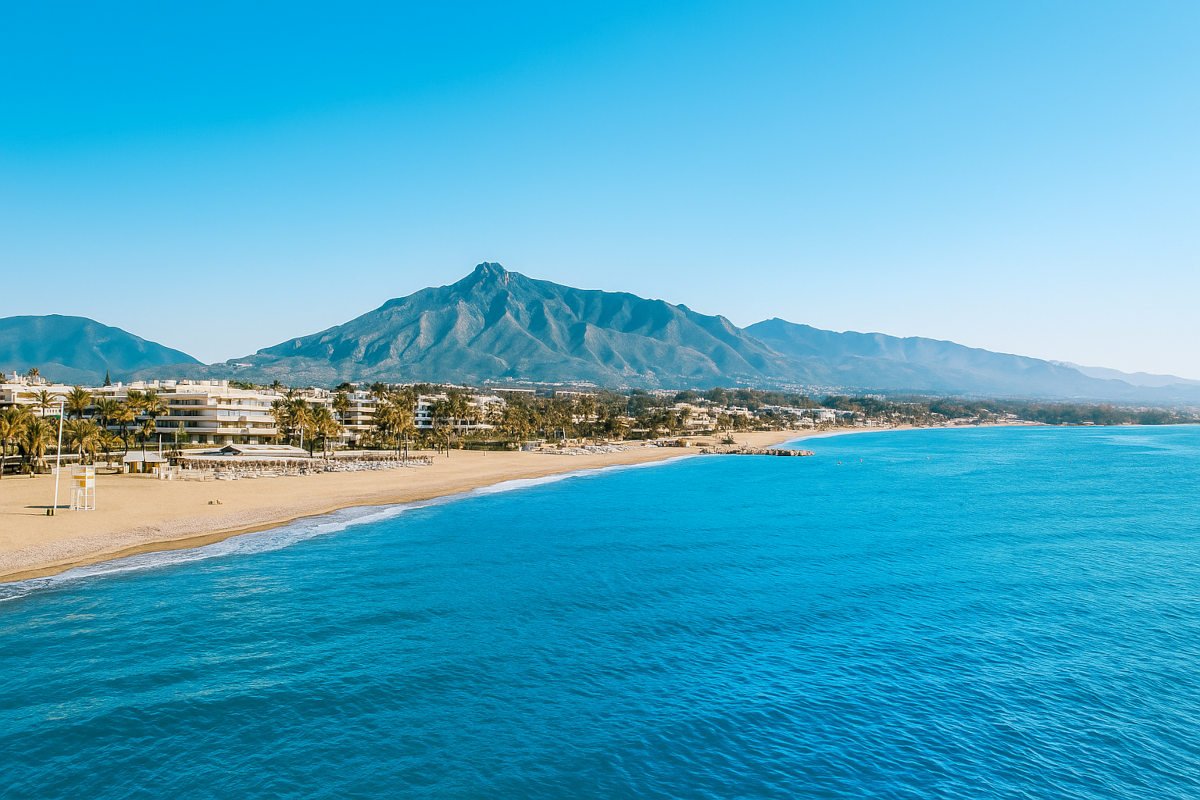
Over the last five years, searches for “digital nomads” in this region have increased 2,400%, and long-stay luxury rentals have grown 40%. Marbella, Estepona, and Benahavís—known as the “Golden Triangle”—now feature co-working-equipped villas, hybrid office/homes, and private chef services.
The Premier Possible coverage of branded residences finds a clear match here: developers are increasingly partnering with luxury hotel brands to create nomad-ready properties with rental management options when owners are abroad.
Dubai – The Business-First Luxury Hub
Dubai’s virtual working program allows high earners to reside in the emirate without local employment, benefiting from zero income tax, world-class real estate, and direct access to key markets. As our guide How to Buy Property in Dubai as a Foreigner details, foreign ownership is now straightforward in freehold areas, giving nomads both a home base and a high-performance asset.
Premier Possible’s Dubai’s Expats: A Growing, Diverse Influx of Foreign Nationals 2024 shows how this influx is reshaping Dubai’s cultural and economic landscape, with wealthy nomads now part of that mix.
The Philippines – Asia’s Rising Contender
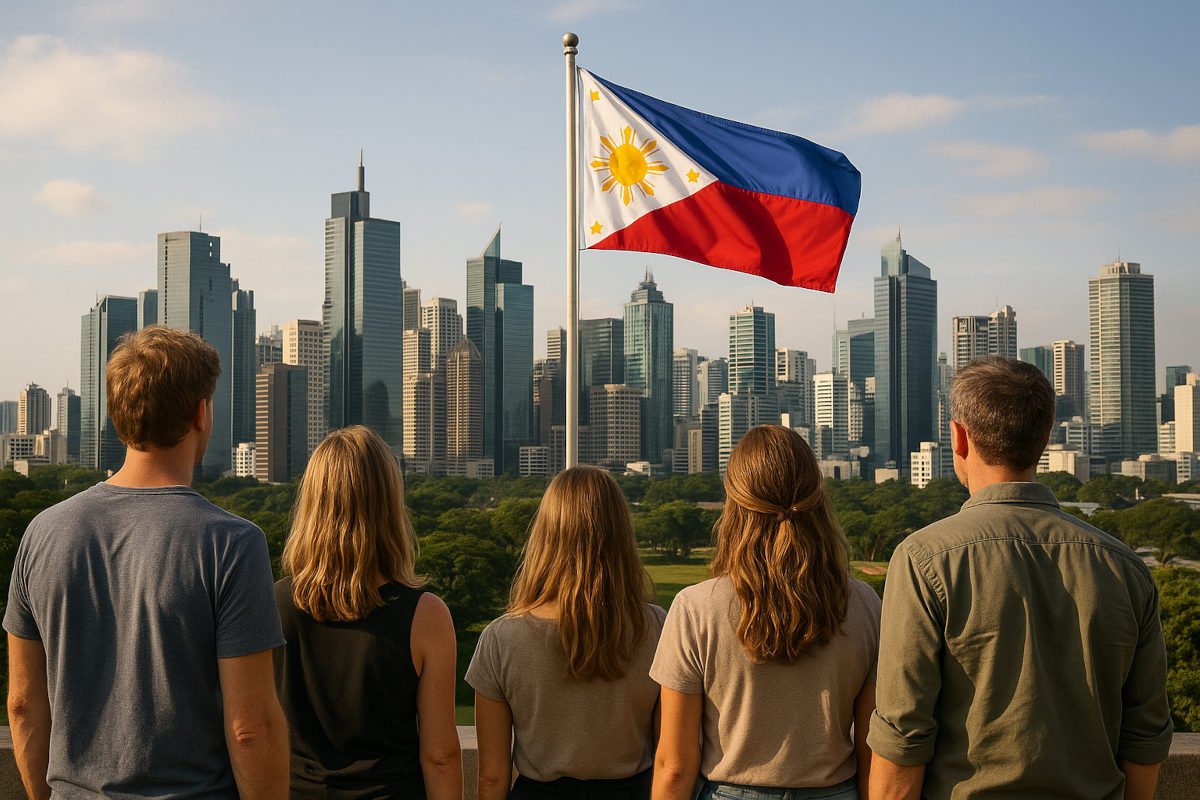
The forthcoming Philippines Digital Nomad Visa will allow remote workers to stay up to two years, tax-free if their clients are overseas. With English widely spoken and some of Asia’s most affordable luxury coastal living, it is poised to become a magnet for affluent nomads.
Our article How to Buy Property in The Philippines as a Foreign National outlines the investment routes—often through long-term leases or corporate structures—that allow non-citizens to hold prime real estate in Manila, Cebu, or Palawan.
Thailand – Wellness Meets Remote Work
Thailand has long been a magnet for remote professionals, but its proposed “Digital Nomad Visa and Work Permit” could elevate it into the top tier of wealthy nomad destinations.
Phuket and Chiang Mai lead the way, offering high-end villas, luxury condos, and co-living resorts with amenities like meditation gardens, rooftop pools, and private chefs. Bangkok remains a draw for those who want cosmopolitan living with premium healthcare and Michelin-star dining.
With competitive property prices, excellent wellness infrastructure, and improving visa options, Thailand blends affordable luxury with a lifestyle designed for productivity and well-being—a compelling formula for high-income nomads.

4. Ownership Without Borders: Tokenization & Fractional Investment
For the modern wealthy digital nomad, real estate is no longer a static purchase tied to one location—it’s a flexible asset class that can be rebalanced, traded, and accessed anywhere in the world. One of the most transformative tools enabling this shift is real estate tokenization: the process of converting property ownership into digital tokens on a blockchain. Each token represents a fraction of the asset, allowing investors to buy, sell, or trade their share almost as easily as a stock.
Unlike traditional property investment, tokenization removes many of the legal and logistical barriers to cross-border ownership:
- No need for complex offshore company setups to hold property abroad.
- Faster transactions with reduced reliance on intermediaries.
- Access to prime real estate markets that may otherwise be closed or cost-prohibitive.
As outlined in Real Estate Tokenization: The Future of Property Investment, this model fits the nomad lifestyle perfectly. A high-net-worth remote entrepreneur can hold stakes in a branded residence in Dubai, a beachfront villa in the Philippines, and a luxury apartment in Lisbon—without the burden of full-time management in each location.
Practical benefits for nomads:
- Global diversification – Exposure to multiple real estate markets reduces risk while capturing upside from different regions.
- Instant liquidity – Tokens can be sold on digital exchanges, freeing capital for new opportunities or lifestyle shifts.
- Lifestyle flexibility – Many tokenized properties integrate usage rights, allowing investors to stay in the property for part of the year.
Imagine an investor holding fractional shares in five properties across four continents. In winter, they stay at their share-owned Costa del Sol penthouse; in summer, they rent it out and switch to a villa in Phuket—all coordinated through a single platform.
For a demographic that rarely stays in one place for long, tokenization transforms real estate from a fixed address into a mobile portfolio—aligning perfectly with the freedom and agility that defines the new era of luxury nomads.
5. Lifestyle Economics: Why They Choose Mobility
Affluent nomads aren’t crossing borders to pinch pennies—they’re moving for value, defined on their own terms. For this demographic, relocation is a strategic decision rooted in financial efficiency, asset protection, and quality of life rather than cost-cutting.
That value equation often includes:
- Tax residency optimization – Selecting jurisdictions where income, capital gains, and inheritance taxes are minimized or eliminated entirely. For example, a crypto investor might base themselves in Dubai for zero capital gains, then rotate to Portugal for partial tax exemptions under the NHR regime.
- Geographic diversification of assets – Owning or investing in properties across continents shields wealth from regional economic volatility. This could mean holding a villa in Spain, a branded apartment in Dubai, and tokenized shares in a Lisbon development.
- Lifestyle elevation – Beyond financial strategy, mobility enables access to luxury experiences, cultural richness, and wellness ecosystems—whether it’s skiing in the Alps in January or chartering a yacht in the Aegean in July.
As discussed in Hong Kong vs. Dubai for Expats, some markets excel at financial advantages—offering favorable tax structures and business-friendly regulation—but can feel limited in lifestyle variety. Others, like Spain’s Costa del Sol or Thailand, deliver immersive cultural and leisure experiences but may come with higher taxation or less direct fiscal benefit.
Wealthy nomads aim to blend the best of both worlds—leveraging one location for its financial structure and another for its lifestyle quality. This often results in multi-base living, where a year is strategically divided among two or three primary residences, each serving a specific purpose: one for tax residency, one for seasonal enjoyment, and one as an investment or rental income generator.
6. Visa Impact Analysis: The Policy Arms Race
Governments worldwide are in a competitive race to attract high-spending remote professionals, introducing digital nomad visas that combine tax incentives, flexible residency terms, and streamlined applications. These programs are not just lifestyle perks—they are economic tools designed to stimulate property markets, tourism, and local business activity.
- Portugal D8 Visa: Brings significant capital inflow; stimulates luxury rentals and co-working spaces.
- Dubai Virtual Work Program: Attracts entrepreneurs without requiring local employment; boosts retail, hospitality, and property sales.
- Philippines Nomad Visa: Poised to expand real estate demand in secondary cities like Davao and Iloilo.
- Thailand Nomad Visa: Expected to merge luxury tourism with long-term residency markets.
- Spain’s Digital Nomad Visa: Offering 24% flat tax rate for qualifying remote income—pulling in Northern European and UK professionals.
This mirrors the effect of Golden Visa programs documented in our previous coverage: property becomes both a key and a currency, unlocking residency rights while serving as a globally mobile investment.

7. Case Studies: Profiles of the New Nomads
Case 1: The Crypto Exit
Michael, 38, turned a well-timed Bitcoin sell-off in 2021 into $7M in liquid assets. His mornings in Lisbon begin on a sunlit terrace overlooking the Tagus River, before video calls with his New York investment advisor. Summers are spent in his tokenized Costa del Sol penthouse—bookable to other high-net-worth nomads when he’s away—while winters unfold in a Dubai branded residence with skyline views and concierge-arranged desert escapes. He uses Portugal’s D8 Visa for EU mobility, while Dubai’s tax regime shields her capital gains.
Case 2: The E-Commerce Empire
Sophia, 42, runs a multi-million-dollar Shopify empire selling luxury athleisure to a global market. In the Philippines, she wakes to the sound of waves in a private Subic Bay villa—her base for family life and strategic planning. Her Marbella property, acquired via Premier Possible’s Listing Platform, doubles as both a European summer retreat and a revenue-generating rental for other elite nomads. Shee manages it remotely, thanks to a full-service property management firm.
Case 3: The Remote Consultant
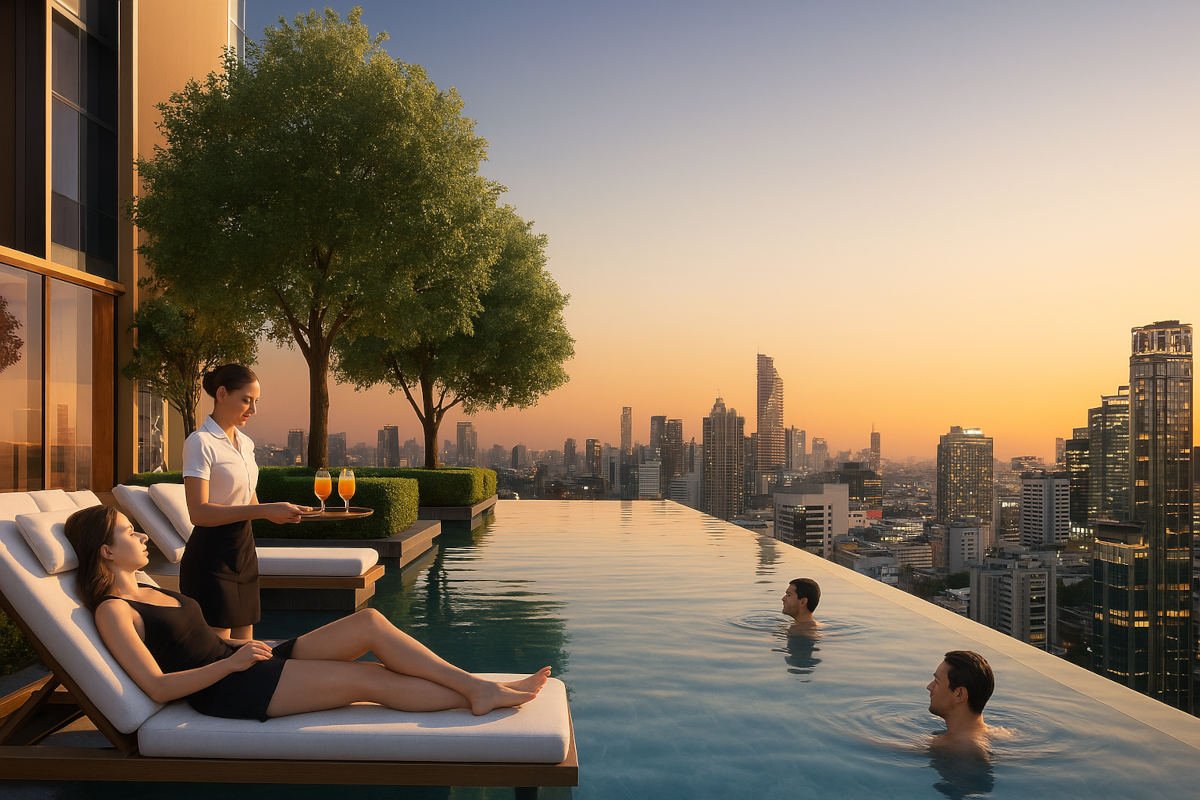
Arjun, 34, earns $500K annually consulting for US tech firms. His year is split between Lisbon’s Chiado district—where cobblestone streets lead to rooftop wine bars—and a Bangkok high-rise with a wellness floor, infinity pool, and in-house massage therapists. His branded residences, booked through a global luxury network, handle housekeeping, grocery stocking, and concierge bookings, leaving him free to focus on client calls and weekend fitness retreats in Koh Samui.
8. Future Outlook: 2025–2030
Over the next five years, the luxury digital nomad movement will evolve from an emerging trend into a mature, highly competitive market segment—shaping everything from visa policy to real estate design.
Hybrid Luxury Developments
Residences will increasingly be purpose-built for the “live-work-travel” lifestyle, integrating private offices, soundproof studios, high-speed fiber, and wellness amenities into the same space. Developers are already experimenting with dual-layout apartments that transform from client-ready boardrooms by day to entertainment lounges by night.
Visa Stacking
Affluent nomads will adopt multi-residency strategies to maximize tax efficiency and travel freedom—such as combining a Golden Visa in Portugal for EU access with Dubai’s Virtual Work Program for tax advantages. This mirrors the approach seen in HNWIs Buying Abroad in 2025: The Golden Visa Effect, adapted for a mobile, multi-base lifestyle.
Property-as-a-Service
Subscription-based access to a network of branded residences will become more mainstream. These homes blur the lines between hotel and home, with a market that has grown by more than 150% over the past decade. Imagine paying a single monthly fee for year-round access to luxury residences in Lisbon, Marbella, Dubai, and Phuket—complete with concierge service, secure personal storage, and a consistent five-star standard.
Increased Government Competition
More countries will tailor visa programs specifically for high-income remote workers, offering not just residency but bundled benefits like tax incentives, property investment pathways, and lifestyle concierge support. Those that act quickly will gain a competitive edge in attracting globally mobile capital.
Integration with AI and Automation
Smart homes will progress beyond convenience features to actively optimize nomad life—adjusting climate control to arrival schedules, preparing workspaces for client calls, and curating local events based on personal interests. Integrated security systems will link across multiple global residences, allowing nomads to monitor their properties in real time.
By 2030, nomadic wealth will be a recognized economic driver, with urban districts designed for this market—combining wellness infrastructure, cultural amenities, and premium connectivity.
Luxury real estate will shift from static ownership to fluid access models like branded residences and subscription-based housing, offering tailored services and global usage rights—proof that wealth and wanderlust are redefining what “home” means.

9. Conclusion: Wealth, Work, and Wanderlust in Harmony
For the wealthy digital nomad, luxury real estate is no longer just a roof over their head—it is dynamic capital, a passport to global mobility, and a platform for curated living.
What was once an investment strategy is now a lifestyle architecture. A penthouse in Lisbon, a branded residence in Dubai, a villa in Marbella, or fractional ownership in a beachfront retreat in the Philippines—these are not isolated purchases. They are strategically selected nodes in a personal global network, chosen for their ability to serve multiple purposes: a home, an investment, a visa pathway, and a base for the next chapter of life.
Premier Possible’s insights into Golden Visas, branded residences, real estate tokenization, and cross-border buying strategies all point to one truth:
The new luxury buyer is not rooted in place—they are rooted in possibility.
In this new era, the lines between work and leisure, investment and lifestyle, home and destination are dissolving. Wealth is no longer tied to a single skyline—it flows, adapts, and positions itself where life feels richest, both in experience and in opportunity.
As governments compete for high-income nomads, developers reimagine the meaning of home, and technology removes the final barriers to mobility, one thing is certain: luxury real estate will be the stage on which the drama of wealth and wanderlust plays out for decades to come.