In 2025, the global landscape of wealth and mobility is rapidly evolving. High-net-worth individuals (HNWIs) are increasingly purchasing second homes—not just as luxury retreats, but as strategic assets that open doors to global mobility, lifestyle benefits, and financial security. At the center of this shift is the rising popularity of Golden Visas: residency or citizenship programs that reward real estate investment with long-term access to foreign markets.
A Flight to Flexibility: Why Global Wealth Is on the Move
The desire for global freedom is not new, but recent geopolitical and fiscal changes have intensified the trend. As The Guardian reported in June 2025, a surge in American interest in New Zealand’s investor visa programs was directly linked to the Trump administration’s new wave of tariffs, isolationist policies, and political instability. Likewise, the UK’s shifting tax policy has triggered a sharp uptick in millionaire emigration. As we have previously covered in our article “UK Millionaires Flee Amid Tax Changes, Boosting Host Nations”, thousands of British HNWIs are moving to countries that combine tax efficiency with lifestyle benefits—like Portugal, the UAE, and Switzerland.
But this isn’t just about escaping unfavorable conditions. It’s also about access—to better schools, stronger passports, global healthcare, investment diversification, and long-term residency security.
Why Golden Visas Have Become a Must-Have for HNWIs in 2025
Golden Visas are government-backed programs that grant residency or citizenship in exchange for qualifying investments—often in real estate. The core appeal is simplicity: buy a property, gain legal status. Over 30 countries offer such programs, including Portugal, Greece, Spain, Turkey, Malta, UAE, and Singapore.
For golden visa holders, the benefits are substantial. These include long-term or permanent residency in stable, high-quality countries; access to world-class education and healthcare; freedom of movement within regions like the EU or the Schengen Zone; and, in some cases, an eventual pathway to citizenship. For globally mobile families and entrepreneurs, it’s a chance to create a flexible future while protecting wealth across borders. Many golden visa destinations—such as Dubai, Singapore, and Hong Kong—also offer significant tax advantages, including zero or near-zero income and capital gains taxes, making them especially attractive to wealth-conscious investors seeking both lifestyle upgrades and financial efficiency.
According to Henley & Partners and Daysium’s 2025 reports, these Golden Visa programs have evolved. Many now focus on:
- Attracting long-term residents rather than just passport shoppers
- Encouraging business and innovation alongside real estate purchases
- Stricter due diligence to combat money laundering
Singapore, for instance, offers a highly selective golden visa for entrepreneurs and investors, detailed by Best-Citizenships.com. Meanwhile, in the UAE, the official Golden Visa portal highlights its 10-year visa tied to property investment, business ownership, or specialized skills.

Destination Wealth: The Top Countries Attracting HNWIs Through Real Estate in 2025
Dubai has become a global epicenter of HNWI real estate investment. As covered by The National and Enterprise UAE, wealthy individuals are projected to spend over $4.4 billion on Dubai real estate in 2025. This is not surprising, given Dubai’s world-class infrastructure, tax-free lifestyle, political stability, and now, its long-term residency incentives.
We have previously made our own deep dives into this trend—“Dubai’s Expats: A Growing, Diverse Influx of Foreign Nationals 2024” and “Hong Kong vs. Dubai for Expats”—highlight how Dubai’s flexible visa options and global accessibility are outpacing more rigid competitors like Hong Kong. This trend is further reflected in our step-by-step guide on “How to Buy Property in Dubai as a Foreigner”, helping investors navigate Dubai’s transparent purchase system.
Portugal and Greece remain strong players in Europe’s golden visa market, though reforms in Portugal have limited eligibility to interior regions and commercial properties. Nonetheless, lifestyle buyers continue to flock to the Algarve, Lisbon outskirts, and Madeira.
Greece offers one of the most affordable entry points in the EU, with a €250,000 minimum property threshold and no minimum stay requirement. Athens and Thessaloniki are emerging as investor-friendly urban hubs, offering strong rental yields.
Turkey, meanwhile, continues to attract investors looking for full citizenship, with a €400,000 property investment minimum. Despite recent currency volatility, Turkish citizenship provides a backup plan for visa-free access to 110+ countries.
From Kuala Lumpur to Auckland: The Surprising Countries HNWIs Are Betting On
New Zealand has quietly become a favorite for American and British HNWIs. Its investor visa programs, including the Investor 1 and Investor Plus visas, provide a gateway to permanent residency in one of the world’s most stable, scenic, and politically neutral countries. These visas require a significant financial commitment but offer unmatched access to clean air, elite education, and a high quality of life in return. As The Guardian notes, wealthy U.S. citizens are increasingly seeking New Zealand not only for its physical beauty but also as a strategic safe haven in an unpredictable world. A major draw is New Zealand’s favorable tax treatment for new residents: under the Transitional Resident Exemption, visa holders enjoy a four-year tax holiday on most foreign income, with no capital gains, inheritance, or estate taxes. This generous window allows HNWIs to restructure their wealth efficiently while enjoying lifestyle and residency benefits.
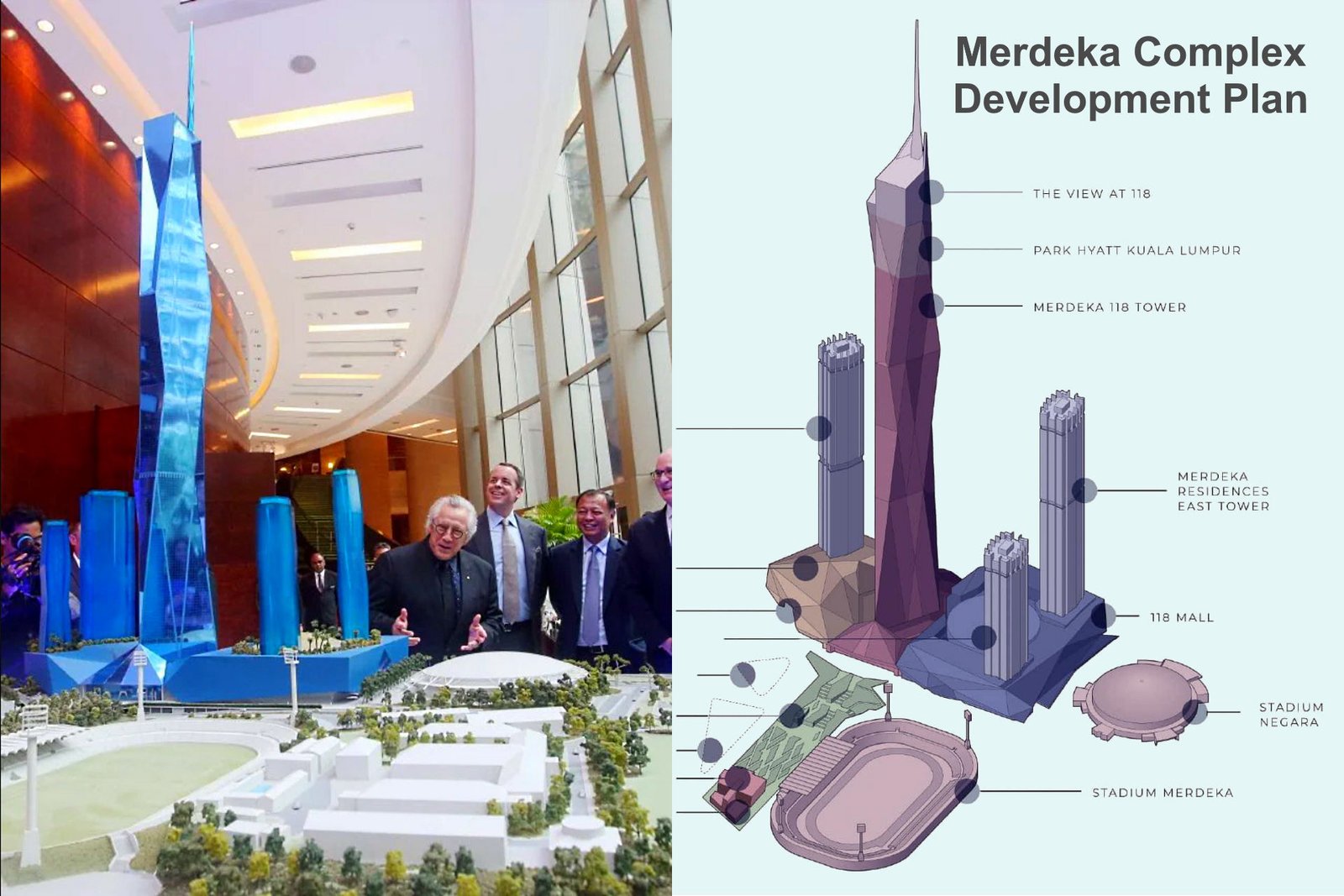
In Southeast Asia, Malaysia’s newly revamped Premium Visa Programme (PViP) and Thailand’s Elite Visa are also gaining traction. These programs allow long-term stay without requiring citizenship renunciation, making them ideal for digital nomads, retirees, and globally mobile entrepreneurs. Malaysia offers a unique blend of affordability, urban sophistication in Kuala Lumpur, and English-speaking accessibility, while Thailand appeals with its vibrant culture, low cost of living, and growing digital economy. Both countries are positioning themselves as lifestyle-first, low-tax destinations that combine flexibility with comfort.

More Than a Second Home: Strategic Lifestyle Planning
For today’s global elite, a second home is no longer just a holiday villa. It’s a cornerstone of strategic lifestyle planning—integrating financial foresight, family priorities, and geographic flexibility into a single asset. HNWIs are hedging against:
- Geopolitical instability
- Tax regime changes
- Capital restrictions
- Passport limitations
According to Times Property and Yahoo Finance, two-thirds of wealthy Americans are now considering buying second homes overseas, primarily to access dual residency, lifestyle flexibility, and future-proof living options.
This shift isn’t just about diversifying assets—it’s about building optionality. Today’s elite are using second homes to establish a global footprint, ensuring their families have access to top-tier education, reliable healthcare, and legal protections no matter where their primary residence may be. Locations like Spain, Thailand, and the UAE are increasingly seen as gateways to security, mobility, and quality of life.
The second home has become a central pillar of long-term planning: part legacy investment, part contingency plan. Permanent or long-term residency in a politically stable, tax-efficient, and globally connected country now offers not just peace of mind, but strategic leverage in an uncertain world. As the global order becomes more complex, global mobility is emerging as a new asset class—valued not just for freedom of movement, but for the life stability it provides.
Positioning for the Global Buyer: How Agents and Developers Can Stay Competitive in 2025
Real estate professionals should adapt their marketing and service models to meet the needs of globally mobile buyers. This includes:
- Highlighting visa eligibility clearly in listings
- Offering legal support or partnering with migration specialists
- Providing localized content for each nationality
- Emphasizing lifestyle benefits like education, healthcare, safety, and cultural access
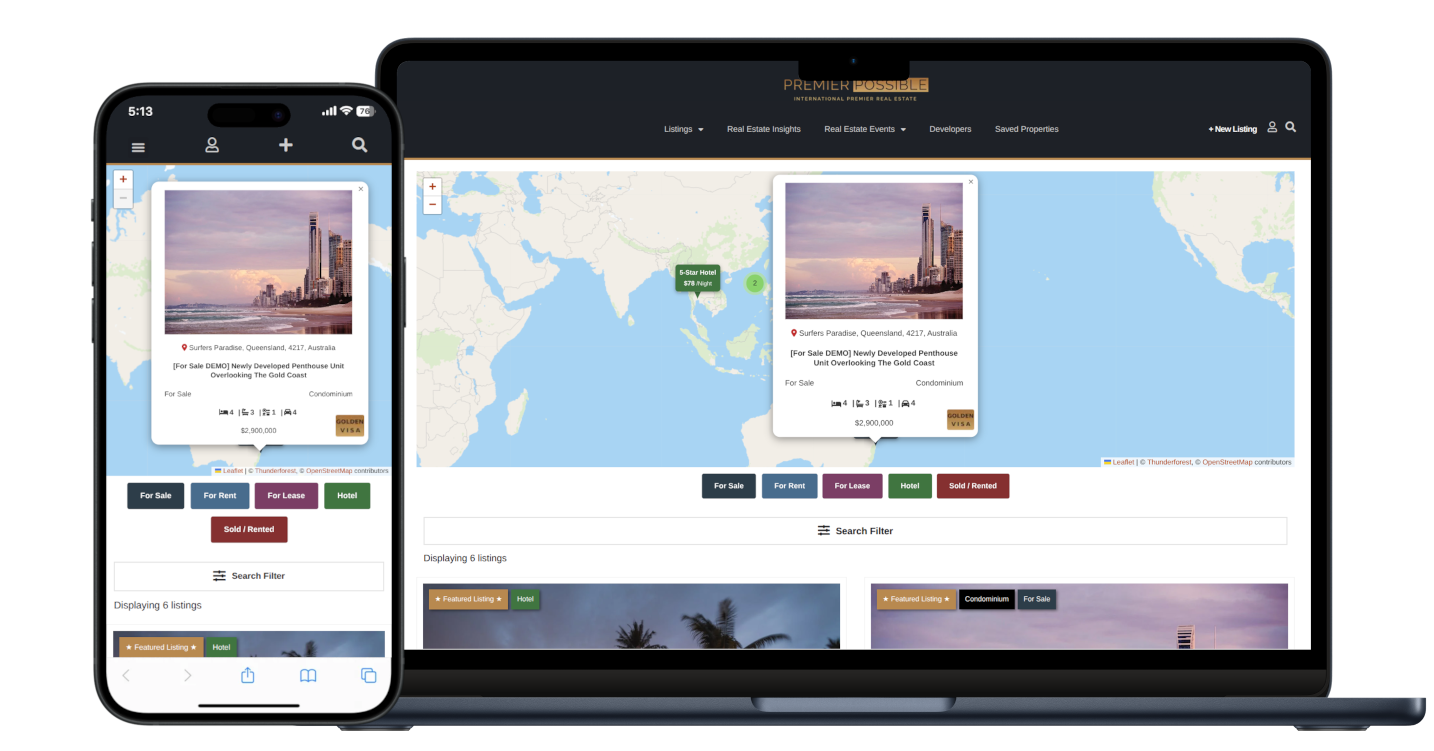
Premier Possible is built to support exactly this shift—by connecting international buyers with verified agents and listings that align with long-term residency goals.
To truly stand out in this evolving space, professionals must also embrace digital transformation. This means integrating AI-driven tools to personalize property recommendations, using multilingual marketing to reach buyers across borders, and crafting campaigns that emphasize not just property features, but residency benefits. In markets like Dubai or Lisbon, listings that clearly communicate a property’s eligibility for a Golden Visa often outperform others. Agents who can navigate visa timelines, facilitate legal processes, and understand tax implications across jurisdictions will be better positioned to serve the new generation of globally mobile investors.

What’s Next for Global Residency: How Property Investment Is Redefining Citizenship and Mobility
The growing demand for golden visas is reshaping the global real estate market. It’s shifting attention away from purely speculative investments toward long-term, lifestyle-focused real estate—with strong legal and mobility benefits.
Governments, in turn, are competing for talent, capital, and stability. From Dubai’s aggressive visa expansion to New Zealand’s high-barrier investment options, it’s clear: HNWIs are no longer waiting for the world to stabilize. They’re creating their own stability by diversifying where they live, work, and own property. New Zealand’s Transitional Resident Exemption is a prime example—offering golden visa holders four years of tax-free foreign income and no capital gains or inheritance taxes. Meanwhile, jurisdictions like Dubai, Singapore, and Hong Kong continue to attract wealth through ultra-low or zero income tax environments, amplifying the appeal of second-home investments as a financial and lifestyle safeguard. These advantages make golden visas more than a migration tool—they are becoming central to long-term tax and estate planning for the world’s elite.
Conclusion: The New Playbook for Wealth, Residency, and Global Strategy
As the global economy becomes more fragmented and uncertain, HNWIs are rewriting the rules of residency. A second home abroad is no longer a luxury. It’s a strategy—a way to secure the future, expand personal freedom, and invest in a better life.
For professionals in real estate, legal advisory, or cross-border finance, understanding this shift is no longer optional. It’s a competitive edge.
Platforms like Premier Possible are uniquely positioned to lead this evolution—offering tools, connections, and intelligence for a mobile, discerning generation of investors.
As global competition for talent and capital intensifies, countries will continue refining their golden visa offerings to attract the world’s elite. Meanwhile, investors are becoming more sophisticated—looking beyond basic residency access toward jurisdictions that provide meaningful long-term value, from tax efficiency to generational security. The convergence of real estate, migration strategy, and personal freedom is now central to wealth planning. In this new era, second homes are more than assets—they’re anchors for global living.