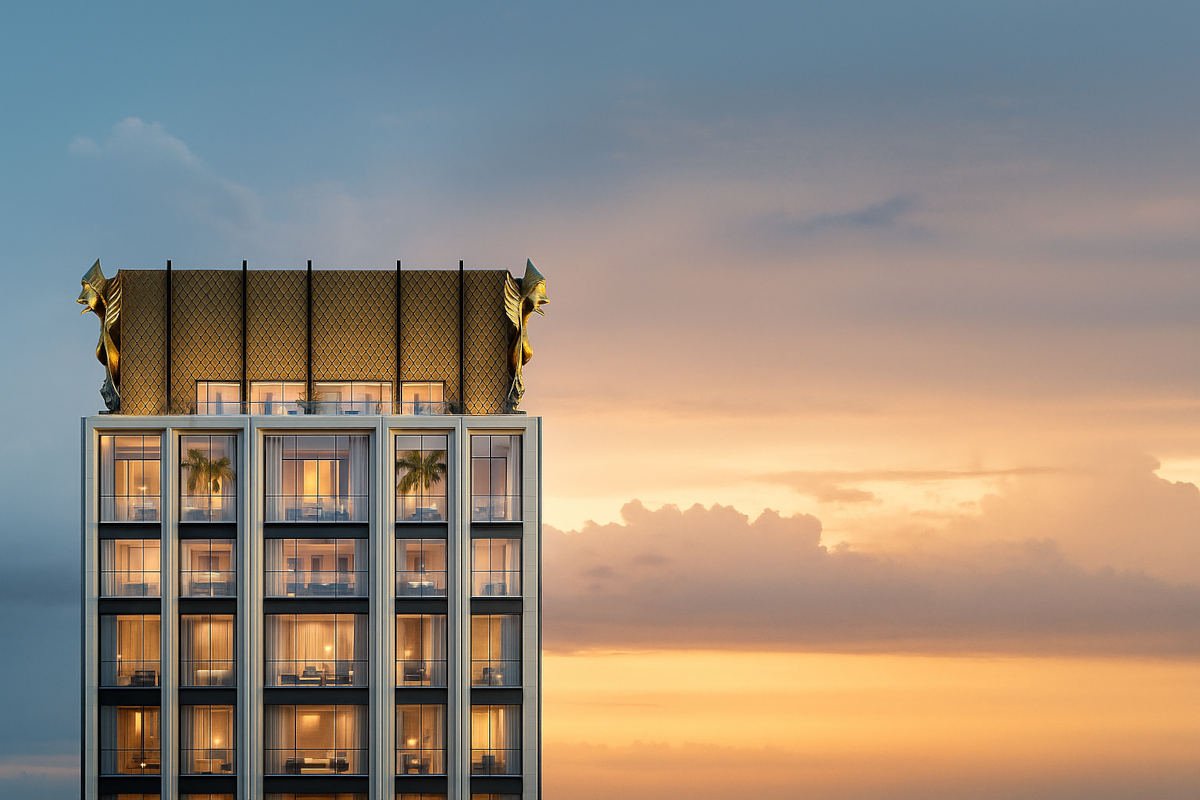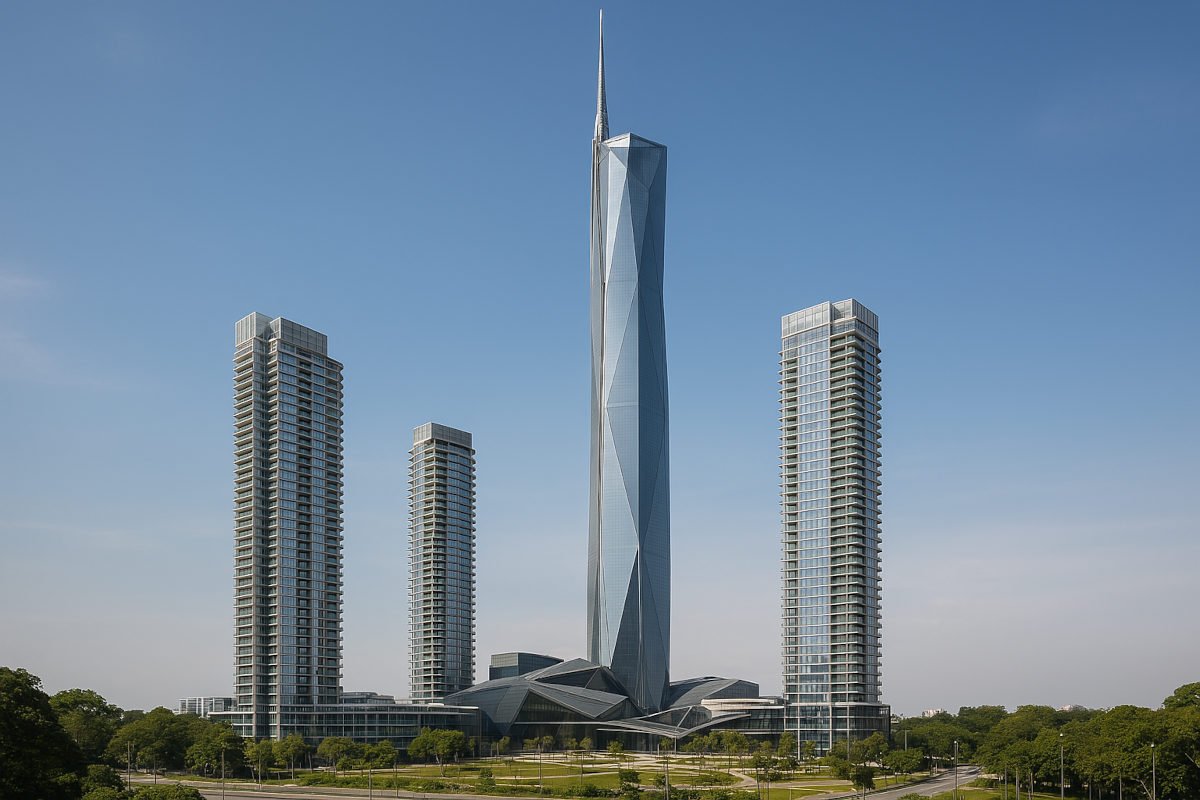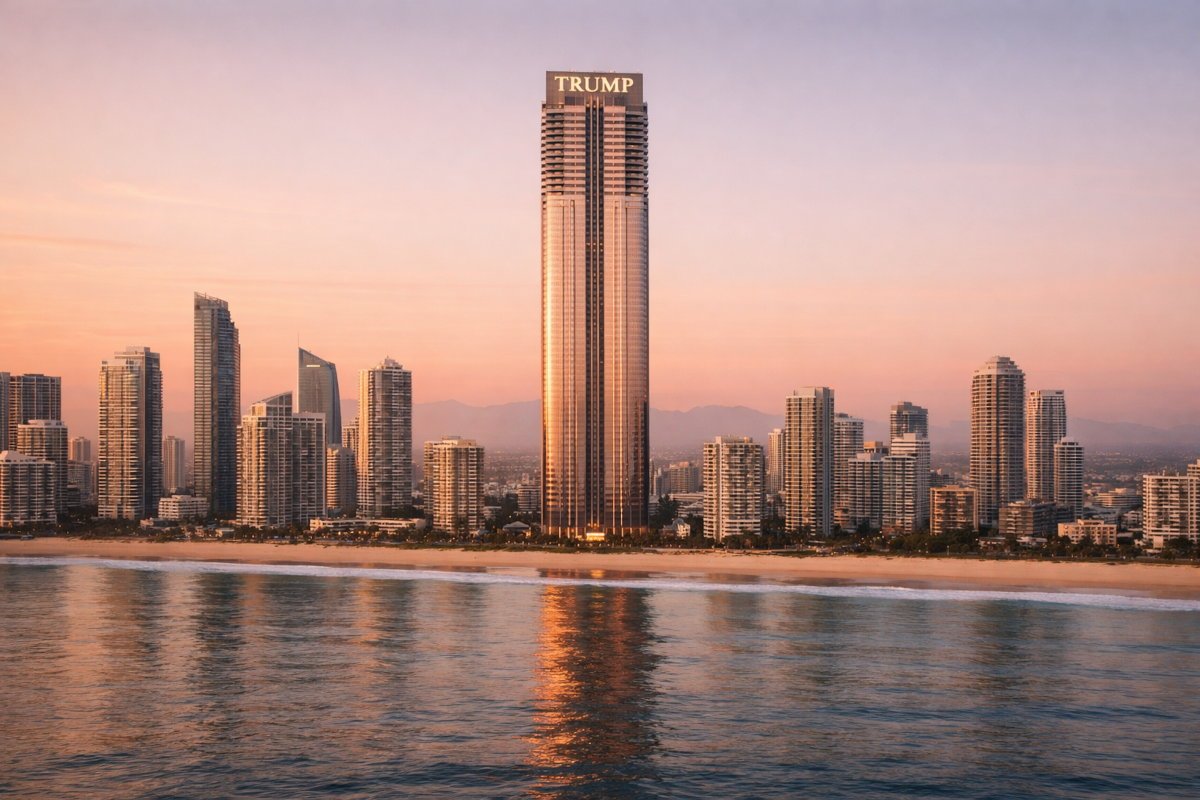
A new skyscraper proposal has reignited the Gold Coast’s long-running love affair with big, bold, headline-grabbing development: the Trump International Hotel & Tower, Gold Coast—also referred to across media as Trump Tower Gold Coast, Trump Tower Australia, and Trump Tower Gold Coast Queensland—a 91-storey, roughly 335-metre Trump-branded hotel-and-residences project planned for Surfers Paradise. With a project worth of $1.5 billion Australian Dollars (USD$1.06 billion).
Backers argue the tower would strengthen the Gold Coast’s position as a global luxury destination, attract high-end tourism, and deliver an internationally marketable landmark. Critics counter that the proposal is as politically polarising as it is architecturally ambitious, and they question everything from infrastructure impacts to whether the project can realistically proceed given planning steps still required and scrutiny around the developer’s history.
What follows is a politically neutral, research-based look at what’s being proposed, who’s involved, why the debate is so intense, and what must happen next for a Trump Tower on the Gold Coast to move from renderings to reality.
What is the Trump Tower Gold Coast proposal?
Officially announced as Trump International Hotel & Tower, Gold Coast, the project is being positioned by The Trump Organization and Altus Property Group as the first Trump-branded development in Australia and a major new luxury landmark for Surfers Paradise.
Key details reported so far include:
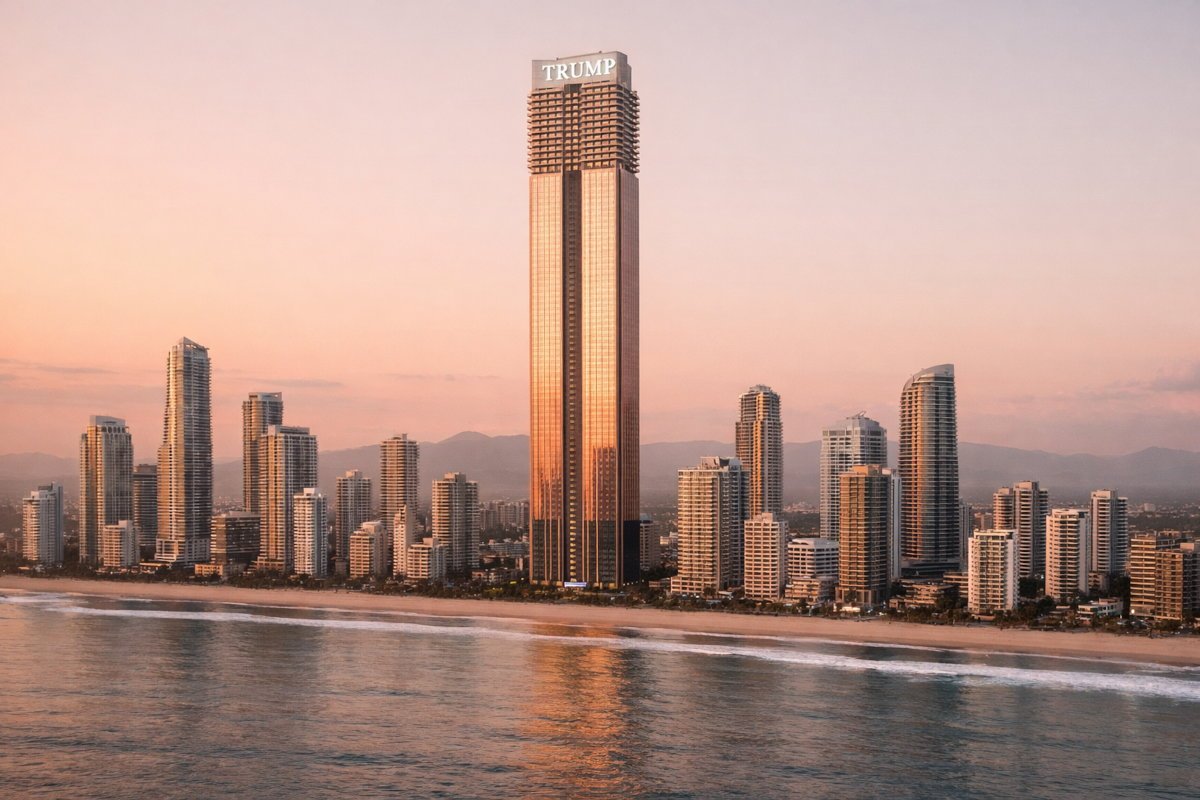
According to the Trump Organization press release, the development is planned as a 91-storey beachfront tower rising to approximately 335 metres, which would make it Australia’s tallest building if delivered as proposed. The tower is anchored by a 285-room luxury hotel bearing the Trump trademark and logo, supported by 272 luxury residential apartments.
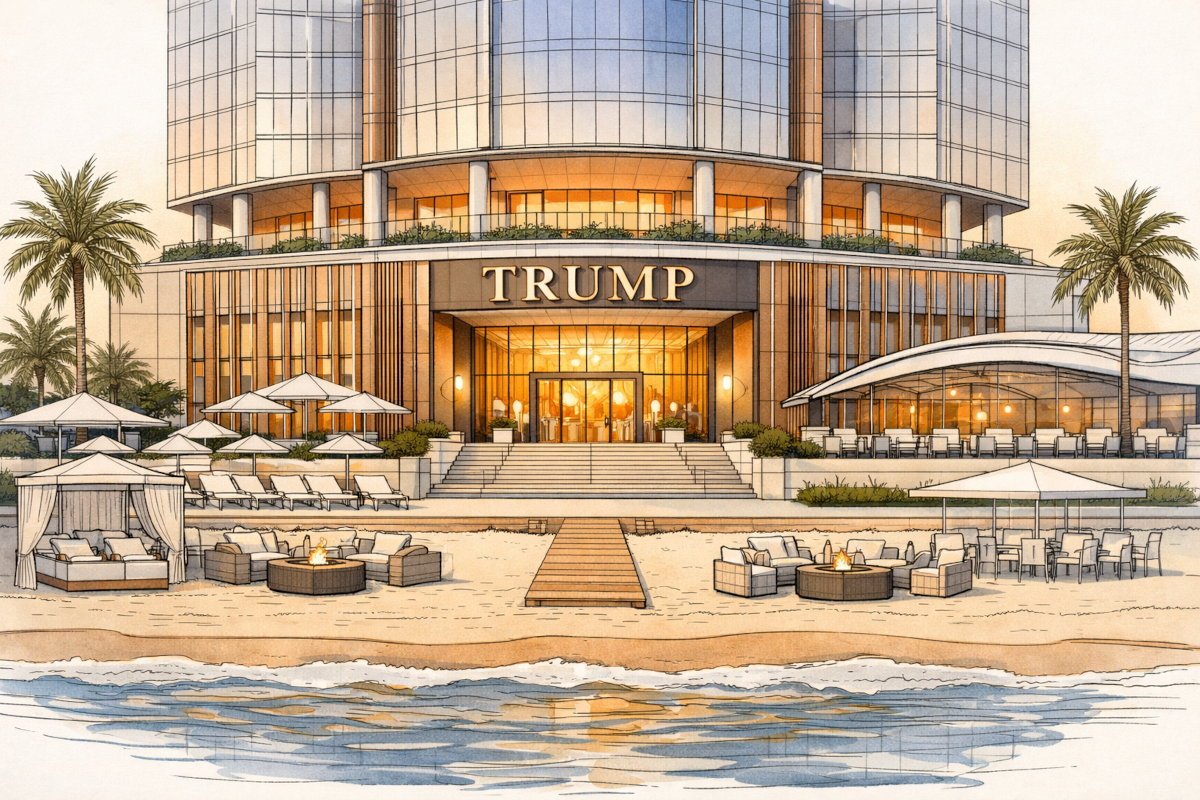
The press release also outlines a three-level podium featuring an exclusive Beach Club, plus more than 3,400 sqm of premium commercial, retail, and dining space, framed as a revitalisation boost for the central Surfers Paradise precinct. In broader reporting, the proposal is frequently described as a Trump-branded “six-star resort-hotel” style concept pairing luxury accommodation with upscale residences and lifestyle amenities. The overall cost is widely reported at around A$1.5 billion, and some early coverage has cited slightly different figures—such as around 340 metres in height and 270 apartments—but the press release is the most direct and internally consistent source for the project’s current specifications. As with most megadevelopments at this stage, final numbers and inclusions can still evolve once formal planning documents and approvals progress.
Where would Trump Tower Australia be built—and how tall would it be compared to existing icons?
The site is described as vacant land on Trickett Street in Surfers Paradise. If the tower reaches the proposed 335 metres, it would surpass the Gold Coast’s Q1 building (commonly cited as 322 metres) and Melbourne’s Australia 108 (often cited around 316 metres) in height comparisons used in local coverage.
At the same time, the Gold Coast is no stranger to “tallest” contests. The Guardian has noted that an even taller proposal—One Park Lane, reportedly aiming for 390m+—has also been floated, underscoring how competitive and speculative the local skyline conversation can be.
So while “Australia’s tallest” is the headline hook, the more practical question is whether the Trump Tower Gold Coast plan can clear the real-world hurdles that stop many megaprojects.
Who is behind the project—and what exactly is the Trump Organization’s role?
The local developer most frequently named is Altus Property Group, led by David Young.
A crucial detail: multiple reports describe the deal as involving hotel management and brand licensing—in other words, the Trump brand and operational standards, rather than the Trump Organization necessarily funding and constructing the building itself. The Guardian reported Young describing the signing of hotel management and brand licensing agreements. ABC reporting likewise described Young saying the deal involved a hotel management agreement and brand licensing agreement. Reuters also reported the Trump Organization signing a deal for its first Australian tower, with Altus framing the project and branding.
Reuters further reported that Young said the building would be Australian-owned and Australian-built, aligned with the Trump company’s design requirements.
Why this matters: Licensing-and-management structures are common in global real estate branding. They can accelerate marketing and sales—especially for luxury residences—while also creating reputation risk for both sides if the project stalls, changes, or becomes mired in controversy.
Luxury promise vs. practical reality: what’s being marketed
The marketing language around Trump Tower Gold Coast leans heavily into ultra-premium positioning: beachfront “landmark” status, high-end amenities, upscale dining/retail, and concierge-style services.
Financially, the pricing narrative is equally bold. Numerous sources report that prices for apartments are likely to start at A$5 million.
But in Australia’s current development environment, construction costs and financing terms can make or break new hotel projects—especially ones aiming for “six-star” fit-outs. ABC’s reporting included commentary from a hotels transaction specialist pointing to construction costs as a major challenge for new hotel projects to get off the ground.
This is where the project’s funding story becomes central to the debate.
Funding claims and investor questions
IPE Real Assets states that Young described a funding model built around private investors from overseas, naming Singapore, Hong Kong, the UAE, and the United States, and describing a mix of debt and equity (including convertible notes) and “patient capital.”
To supporters, that kind of funding pitch suggests the project can proceed without relying on traditional Australian bank pre-sales pressure. To critics, it raises additional questions: who are the investors, what are the conditions, and how resilient is the plan if market conditions shift?
Importantly, ABC reported Altus declined to answer certain questions about funding and capability in its investigation. That refusal doesn’t prove a problem—developers often restrict disclosures—but it does fuel the “show me the receipts” mood surrounding high-profile proposals.
The controversy factor: why this tower is sparking petitions and polarised reactions
Even by Gold Coast standards, the reaction has been unusually heated. Some opposition is local-development typical: concerns about shadowing, congestion, infrastructure, and environmental impacts. But the Trump name adds another layer: global political baggage that inevitably becomes part of the real estate conversation.
Nine reported a Change.org petition opposing the project surpassing 70,000 signatures, led by Craig Hill, who argued the development could cast a long shadow over Surfers Paradise and claimed significant public infrastructure costs could follow. Nine also reported a separate figure of 50,000+ signatures in earlier coverage of the backlash.
Meanwhile, other outlets noted “duelling petitions” and fierce online debate around the proposal.
ABC captured the broader split: some business voices see tourism upside, while others say the brand could turn visitors away, and that there is a “very big divide” in public opinion.
Put simply, it’s being weighed as both a major development proposal and a cultural symbol—with debates about height, traffic, shadows, and infrastructure unfolding at the same time as arguments over what the Trump brand represents and how that reputation might shape the Gold Coast’s image.
Mayor meetings, optics, and the politics-around-the-project
The proposal gained extra momentum—and scrutiny—after reports that Gold Coast Mayor Tom Tate met with Donald Trump shortly before the announcement. That meeting matters because it shapes the storyline around the project before any formal planning decision is made.
On one hand, high-profile meetings can function as signal-building: they can reassure backers that the project has influential local interest, help a developer market the concept internationally, and generate the kind of global attention that luxury projects often rely on to attract buyers, partners, and hotel customers. For a tourism-driven city, supporters may also see it as a way to position the Gold Coast as a destination that can host “world brand” developments.
On the other hand, opponents often read the same optics very differently. When an elected official is publicly associated with a polarising brand early in the process, it can raise concerns about perceived bias, “done deal” messaging, or pressure on the approvals pathway—even if the statutory planning process remains unchanged. In environments where trust is already fragile, the impression that a project is being “sold” politically before it is properly assessed can harden resistance and energise petition campaigns.
What’s important to keep clear is the separation between promotion and permission. A mayor can advocate, meet stakeholders, and speak positively about economic benefits—but a tower of this scale still has to go through the formal development application process, technical studies, public submissions, and whatever state or council assessments apply. The Guardian’s reporting tapped into a familiar Gold Coast theme here: residents have seen plenty of big promises and glossy renderings over the years, so many people focus less on the photo-op moments and more on whether the project can clear the real-world checkpoints.
Planning reality check: what approvals are needed and what’s still missing
The single biggest “reality check” thread across multiple credible reports is this: a formal development application (DA) is still required, and public agencies are not treating the tower as a done deal just because it carries a global brand.
The Guardian reported officials welcoming investment while also emphasising they’ll only assess the project once a formal application is lodged. In a later piece, the Guardian said claims about early works and fast start dates were contradicted by local government responses, which stressed that a proper application is still needed—and that a tower of this scale typically takes years to move from proposal to construction.
The Australian Financial Review adds an important detail: the site already has council approval for a different high-rise (an 89-storey tower), but council representatives said they had not yet received a DA for the newly proposed Trump-branded tower, according to ABC reporting—meaning the new concept still needs to be formally lodged and assessed (or go through a substantial change process, depending on what is being altered).
Once a DA is submitted, the City of Gold Coast process can involve referrals to other agencies (including Queensland Government where relevant), information requests, public notification for complex/impact-assessable applications, and then a decision—with the potential for appeals depending on the outcome.
The developer scrutiny: bankruptcies, a collapsed company, and why it’s dominating headlines
A large portion of the media scrutiny is focused on developer background—specifically David Young’s business history.
ABC reported that Young has been declared bankrupt twice (including a bankruptcy in 2010 and an earlier one in 1991), with both legally completed.
A separate ABC investigation reported on a collapsed business linked to Young Land Corporation, citing a liquidator’s report and unpaid creditors, and allegations in that report about difficulties contacting the director during liquidation and missing books/records—alongside claims ASIC couldn’t locate him at the time to prosecute alleged non-compliance (ASIC declined to comment).
These are serious allegations and contentious facts, and they are exactly why the proposal is being treated by many outlets as more than a simple property story. For supporters, a turbulent history may be framed as a “comeback” narrative. For critics, it’s a due-diligence red flag: Can a developer with past financial collapses deliver a $1.5B, 91-storey luxury tower?
“Flash and bluster” vs. genuine momentum: the Gold Coast track record problem
One reason skepticism is so intense is that the Gold Coast has seen its share of ambitious, headline-ready proposals that generate huge attention early but then stall, morph, or quietly disappear once costs, approvals, and financing realities bite. The Guardian’s “glitter strip” piece leans into that local memory, noting there were previous plans for a Trump Tower in Queensland almost 20 years ago that never eventuated—placing the current announcement in a longer pattern of big renders and bigger promises.
There’s also a broad Trump-brand history overseas, Trump-named projects in places like Rio, Batumi, and Tijuana that were announced with glossy marketing but ultimately were never built, existing mainly as archived press releases and renderings. That context doesn’t prove anything about the Gold Coast proposal—Trump-branded towers do get built in some markets—but it helps explain why many locals and analysts default to “believe it when you see it.”
At the same time, the Trump brand continues to pursue major international projects. In Dubai, for example, Trump International Hotel & Tower, Dubai has been launched by Dar Global as an 80-storey luxury development scheduled for completion in 2031. The tower is positioned as a high-end branded residence project, complete with luxury apartments, premium amenities, and what is promoted as the world’s highest outdoor infinity pool. Set along Sheikh Zayed Road with views toward landmarks such as the Burj Khalifa, it aligns with Dubai’s well-established appetite for iconic, brand-led vertical living.
That contrast is important. In markets like Dubai—where branded residences are a mature and proven segment—large-scale, internationally branded towers regularly move from render to reality. But development pathways, regulatory processes, funding structures, and political environments differ significantly from those on the Gold Coast. A project’s success in one jurisdiction does not automatically translate to another.
It also feeds into a very practical point: megatowers usually “rumble on for years” in development and can go through multiple iterations before (and if) they reach a final, approved form. And right now, the project is still at the announcement-and-marketing stage—ABC reported the Gold Coast’s acting mayor said a development application had not yet been submitted. That’s why the prevailing mood from cautious observers is essentially: show the application, show the approvals pathway, show the funding certainty—then we can talk seriously about timelines and groundbreaking.
What supporters say: tourism, branding, and luxury investment
On the pro side, the pitch is straightforward: a globally recognisable brand + beachfront location + luxury amenities = a magnet for wealth and tourism.
ABC reported business voices describing the tower as a potential tourism asset, even while acknowledging deep division in public opinion. Reuters reported Altus explicitly framing the project as positive for Queensland tourism and selling the “Trump” name as a luxury signal.
Supporters also tend to argue that luxury towers can generate local jobs during construction and operations—though the scale and timing of those benefits depend heavily on whether the project proceeds and what “local content” requirements apply.
What critics say: infrastructure, environment, housing pressures, and brand backlash
Opposition arguments cluster into four themes:
- Infrastructure and public cost concerns (roads, utilities, services)
- Environmental and planning impacts (shadowing, beach amenity impacts, congestion)
- Housing market spillovers (whether ultra-luxury product inflates broader prices and rates)
- Brand and political polarisation (the “Trump effect”—for or against)
Notably, even some critics who focus on planning impacts still acknowledge that the branding amplifies public emotion. Nine’s petition coverage reported that opponents argued Trump’s association wasn’t their only issue—while also acknowledging the name was a major factor.
So… will the Gold Coast Trump Tower actually be built? What happens next
Right now, the most grounded answer is: it depends on whether the project can move from announcement to approvals, financing, and credible delivery.
Based on the most solid reporting from Reuters, ABC, Nine, AFR and the Guardian, the practical next steps that will decide the outcome include:
A formal development application must be lodged and assessed—until that happens, the project remains a proposal rather than an approved build.
The project must demonstrate planning compliance, engineering feasibility, and robust environmental and coastal management appropriate for a beachfront megastructure—especially around wind, shadowing, traffic, servicing, and public realm impacts.
The developer must show a durable pathway through construction-cost risk, procurement, and funding certainty in a high-cost environment, where hotel towers can be particularly difficult to finance without strong pre-sales and credible capital partners.
Public pressure—both opposition and support—will continue to shape the atmosphere around the approvals process, influencing how intensely the proposal is scrutinised and how politically sensitive decisions may become.
There’s also a “real world” milestone that often separates publicity from progress: when detailed designs, consultant reports, and a clear staging plan appear in the planning system, the conversation usually shifts from speculation to specifics. Until those documents are public, many of the headline claims (timeline, exact mix, final height) can still change.
In other words: the Trump Tower Gold Coast proposal is real as a deal and a concept. But whether it becomes a physical tower depends on the unglamorous parts of development—applications, approvals, financing, and delivery discipline—that don’t fit neatly into a headline.
Final takeaway
The proposed Trump International Hotel & Tower, Gold Coast (often shortened in headlines to “Gold Coast Trump Tower” or “Trump Tower Gold Coast”) is a rare mix of genuine megaproject ambition and maximum controversy. On the ambition side, the concept being promoted is enormous—a 91-storey, roughly 335m+ beachfront tower, priced around A$1.5B in reporting, with a luxury hotel, high-end residences, and a beach-club-style podium designed to make a statement on the Surfers Paradise skyline. On the controversy side, the project has instantly become a lightning rod—fueling petitions, brand-driven backlash, and intense scrutiny of the developer’s track record and the project’s deliverability.
If you’re watching this as a buyer, investor, urbanist, or local resident, the most important thing to follow isn’t the render or the headlines—it’s the paper trail. The deciding factors will be the formal development application, the technical reports and conditions that come with it (traffic, wind, shadowing, coastal impacts, servicing), and the financing reality that can survive construction-cost shocks and market shifts. Those documents are where a project either proves it’s real—or starts quietly shrinking, stalling, or changing form.
Until those steps are publicly on the table, the tower remains what it is right now in the public record: a heavily promoted proposal that has already reshaped the conversation about Surfers Paradise—forcing a bigger question into the spotlight: does the Gold Coast want its next icon to be defined more by skyline ambition, or by the controversy that comes with the brand attached to it?