In the evolving world of high-end living, few trends have made as powerful a statement as branded residences. These unique properties, typically developed in collaboration with luxury hospitality, automotive or fashion brands, offer a lifestyle that combines prestige, convenience, and world-class service. But what exactly are branded residences, and why are they rapidly becoming the new standard of luxury real estate?
What Are Branded Residences?
Branded residences are residential properties associated with well-known luxury brands—often premier hospitality, luxury fashion, or high-end automotive names—that provide buyers with upscale living environments enhanced by brand prestige and five-star amenities. The concept dates back nearly a century, with the Sherry-Netherland Hotel in New York in 1926, but has only gained serious global traction in the last two decades.
These homes are typically co-developed by a real estate firm and a brand (like Four Seasons, Armani, Dolce & Gabbana or Porsche), and are either standalone residences or part of mixed-use developments that include hotels or retail elements. Owners not only get to live in a beautifully designed space but also enjoy signature services such as concierge assistance, spa facilities, housekeeping, and gourmet dining.
According to Forshaw Group, branded residences fuse the security and familiarity of brand affiliation with the individuality of private ownership, making them especially appealing to high-net-worth individuals seeking a blend of consistency and exclusivity.
“Branded residences refer to high-end residential properties that are sometimes associated with well-known brands, usually within the hospitality and luxury lifestyle sectors. These properties come equipped with home comforts along with high-end services and amenities, and which are usually reserved for five-star hotels.” – ForshawGroup.com

Branded vs. Non-Branded Residences
The key difference between branded and non-branded residences lies in the experience, amenities, and brand association. Traditional luxury properties might offer fine materials, good locations, and privacy, but they often stop short of delivering the level of personalized services, global consistency, and marketing power that a branded property can. Branded residences also often comes fully furnished with designer furniture and appliances, making them turnkey move-in ready upon turnover.
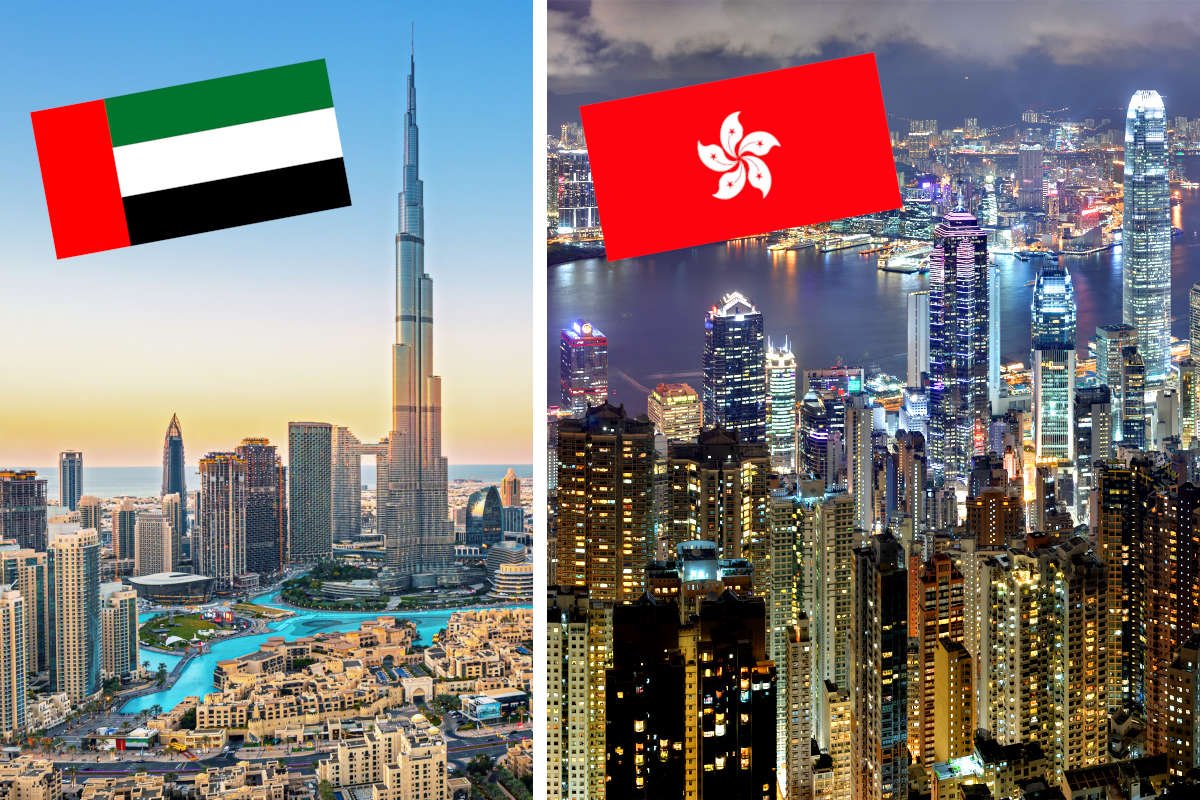
According to Savills’ Branded Residences Annual Report 2024–2025, branded residences command an average price premium of 30% over comparable non-branded properties. This premium reflects the added value buyers place on the association with prestigious brands, enhanced services, and superior amenities. In certain markets, such as Dubai, this premium can be even higher, reaching up to 40%, driven by strong demand and limited supply of luxury branded properties.
These figures underscore the significant impact that brand affiliation has on property values in the luxury real estate sector. The combination of brand prestige, quality assurance, and lifestyle offerings contributes to the willingness of buyers to pay a substantial premium for branded residences.
The Recent Surge in Popularity
The branded residence sector has experienced explosive growth in the past decade after gaining the first momentum in the 1980’s, driven by increasing global wealth, international mobility, and the rising expectations of luxury consumers.
According to a 2024 article by Hospitality Design, over 600 branded residential schemes are slated for completion by 2030. Furthermore, according to the Savills Branded Residences Annual Report 2024–2025, the global branded residential sector has experienced significant growth. As of early 2024, there are over 740 branded residential schemes operating worldwide. This number is projected to surpass 1,530 developments by 2031, indicating more than a 100% increase in seven years.
This rapid expansion underscores the increasing demand and popularity of branded residences in the luxury real estate market.
Savills’ 2024/2025 insights reveal that demand for branded residences is particularly strong in markets like Dubai, Miami, Bangkok, and Vietnam, where international investors seek lifestyle-driven, asset-secure opportunities.

Why Branded Residences Appeal to Buyers
Several factors fuel the surging demand:
- Trust and Prestige: Buyers feel reassured by aligning with globally respected brands like Ritz-Carlton, Armani, or Porsche.
- Lifestyle Integration: Services such as valet parking, private chefs, wellness spas, and exclusive lounges elevate everyday living.
- Global Consistency: Whether you’re in London or Dubai, the brand’s quality and service level remain consistent.
- Rental Yield Potential: Many branded residences are eligible for hotel-managed rental programs, enhancing the property’s ROI.
As Forbes Global Properties put it, this model is a triple win for developers, brands, and buyers—enhancing reputation, generating revenue, and meeting the lifestyle demands of discerning clients.
Where Are Branded Residences Most Common?
Branded residences are often found in urban centers, resort destinations, and iconic locations. Miami, Dubai, New York, and Bangkok rank among the global leaders.
- Miami is a hotbed for fashion-branded towers like the Armani/Casa Residences, Bentley Residences, and Porsche Design Tower.
- Dubai has seen rapid expansion with projects like Four Seasons Private Residences Jumeirah, The Oasis by Emaar and Bulgari Residences.
- Bangkok, Kuala Lumpur and Vietnam are emerging players, offering more affordable branded options that appeal to both regional and international investors.
Who Buys Branded Residences?
The clientele for branded residences is as exclusive as the properties themselves:
- Ultra-high-net-worth individuals (UHNWIs) seeking luxury homes in multiple global cities.
- Expats and international investors looking for secure, hassle-free ownership. Many branded residences offer their unit owners hotel operation programs allowing them to rent their units as hotel suites, in addition to regular lease. Making these kind of residences lucrative investments.
- Celebrities and public figures valuing privacy and prestige. For instance, Lionel Messi owns an unit at Porsche Design Tower in Miami
- Design and brand loyalists—wealthy individuals who identify strongly with a particular fashion, automotive, or hospitality brand.
Savills notes that younger buyers are becoming an increasingly important segment in the branded residence market, influencing the design, amenities, and service offerings. Additionally, emerging markets in Asia and the Middle East are experiencing notable growth, attracting high-net-worth individuals seeking luxury living environments aligned with global brand standards.

888 Brickell by Dolce & Gabbana: A Prime Example
One of the most talked-about branded residences currently under development is 888 Brickell in Miami—the city’s first supertall skyscraper, developed in collaboration with Italian fashion powerhouse Dolce & Gabbana.
As explored in this article, 888 Brickell represents a new era of fashion-branded real estate, where every design element, from lobby to penthouse, is infused with the D&G aesthetic. The project offers 259 branded residences alongside a five-star hotel program, signature dining restaurant, and private club—all reflecting a deep commitment to luxury, design, and experience.
This development embodies the shift toward high-concept, brand-immersive living, and underscores Miami’s role as a global capital for luxury innovation.
Examples of Completed and Upcoming Branded Residences
Several prestigious branded residences have already made headlines or are currently under development:
Armani/Casa Residences – Miami
A 56-story tower designed by César Pelli, offering interiors curated by Giorgio Armani. Situated in Sunny Isles Beach, featuring 308 exclusive luxury residences. Set on a 3.11-acre property, the tower offers beautifully landscaped gardens and direct access to 300 feet of pristine beachfront.
Aston Martin Residences – Miami
A sail-shaped tower with bespoke interiors and its own yacht marina.
Unmatched prestige, exceptional craftsmanship, and uncompromising standards define the Aston Martin legacy. For over a century, the name has stood as a symbol of excellence in automotive design, recognized globally as one of the most iconic and distinguished marques. Every Aston Martin is bespoke and meticulously handcrafted, reflecting the unique personality of its owner. This same philosophy guides the Aston Martin Residences at 300 Biscayne Boulevard Way, where every detail has been thoughtfully designed to strike the perfect balance between spacious living, abundant natural light, breathtaking views, and the demands of a contemporary cosmopolitan lifestyle.
Porsche Design Tower – Miami
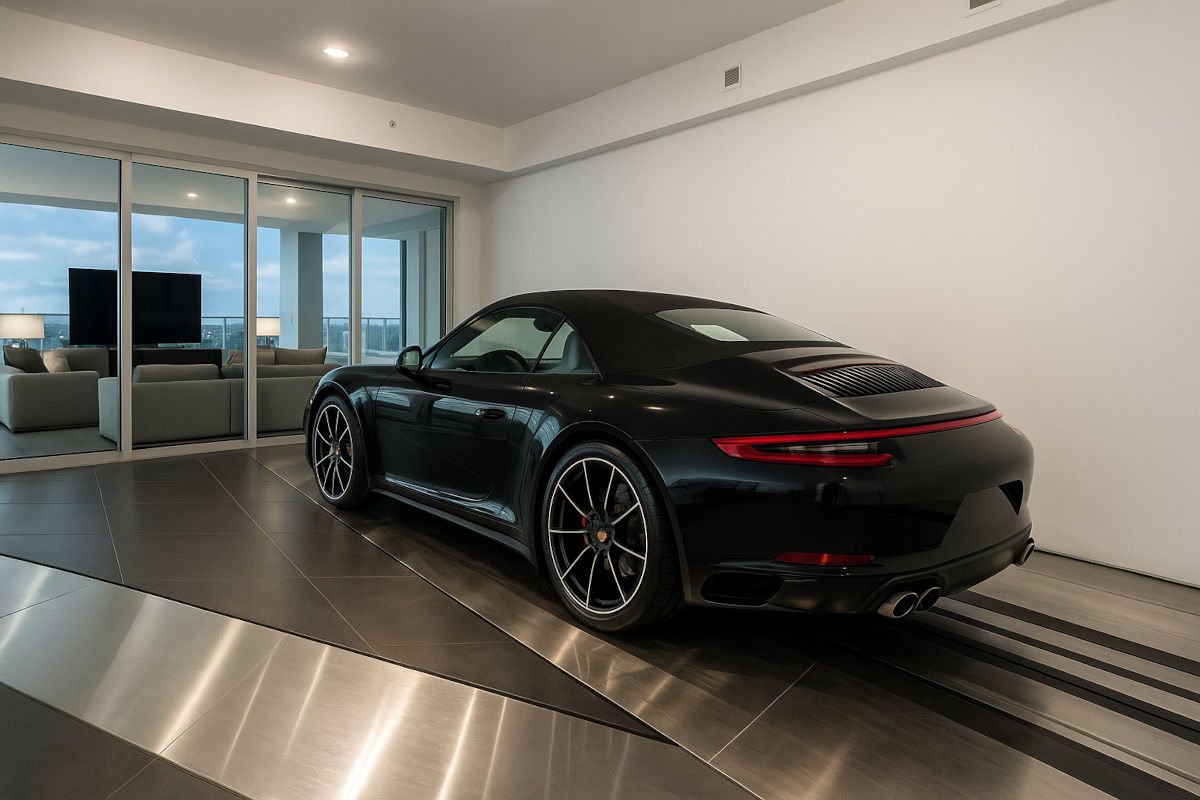
One of the first to introduce the ‘Dezervator’ car elevator concept.
Porsche Design Tower Miami is a one-of-a-kind luxury residence that redefines elite living. Featuring 132 exceptional units, each home includes a summer kitchen, fireplace, and a private in-unit garage—allowing owners to showcase their prized vehicles in style. Located in one of the world’s most prestigious destinations, residents enjoy access to gourmet dining, exclusive nightlife, and renowned art galleries and museums.

Four Seasons Private Residences – Dubai at Jumeirah
Blending beachfront serenity with hospitality elegance.
For more than 35 years, Four Seasons has set the benchmark in managing and servicing some of the world’s most esteemed residences. With exceptional design, iconic locations, and a reputation for flawless, intuitive service, Four Seasons has curated one of the most coveted portfolios of luxury properties globally. Owners of the Four Seasons Private Residences in Dubai enjoy unparalleled privileges, including access to the renowned services and amenities of nearby Four Seasons Hotels and Resorts. From priority reservations at the Beach Club to exclusive wellness, spa, and culinary experiences, every detail is designed to deliver a lifestyle of effortless sophistication.
According to the sixth edition of Branded Residences: An Overview by Graham Associates, Marriott is the largest hotel operator of branded residences, while YOO leads among non-hospitality brands. Hotel groups continue to dominate the sector, accounting for 80% of projects, with approximately two-thirds positioned in the luxury segment.
The Future of Branded Residences
The branded residence model is no passing trend. As Dreamer Real Estate notes, branded residences offer more than just luxury accommodations; they provide complete living experiences characterized by first-class comforts, thoughtful design, and meticulous attention to detail, reflecting the brand identity.
With increasing competition among developers and brands to differentiate their offerings, we’re likely to see:
More boutique and niche brands entering the space
Beyond the traditional hospitality giants, smaller lifestyle, fashion, wellness, and even art-focused brands are beginning to explore branded real estate. Their more targeted and curated identities appeal to younger affluent buyers looking for exclusivity and self-expression over mass appeal.
Deeper integration of smart home technology and sustainability
As buyers become more conscious of both convenience and climate impact, branded residences will increasingly offer advanced home automation systems integrated with AI, energy-efficient construction, and ESG-aligned operations as standard — not as luxury add-ons.
A stronger focus on experiential living and community
Future developments will go beyond concierge service and rooftop lounges to offer immersive wellness programming, cultural events, co-working lounges, and brand-curated social experiences — transforming residences into lifestyle ecosystems.
The rise of hybrid and standalone models
While many branded residences are tied to hotels, standalone branded projects — without an attached hospitality component — are gaining traction, offering the same design and service ethos in purely residential environments.
More regional tailoring
Global brands will increasingly localize design, amenities, and services to match regional tastes, cultural preferences, and climate conditions — creating branded experiences that feel more personal and authentic, rather than one-size-fits-all.
Expanding into new price tiers
While the sector has long been dominated by ultra-luxury offerings, midscale and mid-upscale branded residences are beginning to emerge, particularly in Asia and Latin America — democratizing the model for a broader affluent demographic.

Savills’ 2024–2025 outlook indicates a particularly strong pipeline in Asia and the Middle East. Vietnam, for example, is now host to several branded residence projects targeting luxury buyers from Korea, China, and beyond.
As global wealth rises and buyers seek residences that are not only beautiful but also branded, serviced, and secure, this hybrid model is poised to reshape the upper end of the real estate market.
Final Thoughts
Branded residences have moved far beyond novelty — they are now a defining force in the evolution of global luxury real estate. Blending the aspirational allure of elite brands with the operational excellence of five-star hospitality, they offer a rare trifecta: prestige, performance, and peace of mind.
In a world where buyers seek not just homes, but curated lifestyles and long-term value, branded residences deliver an irresistible proposition. Whether it’s the design precision of Armani, the exclusivity of Four Seasons, or the experiential flair of Porsche or Dolce & Gabbana, these properties extend brand identity into everyday life — from valet service to interior finishes.
Developers benefit from increased sales velocity and price premiums. Buyers gain from consistent service, turnkey convenience, and global recognition. And the brands themselves tap into a powerful new channel of loyalty, extending their presence into the most personal space of all: the home.
From iconic towers like 888 Brickell in Miami to expanding markets in Dubai, Ho Chi Minh City, and beyond, the momentum is global, and it’s accelerating. The sector’s growth — in volume, scale, and creative ambition — shows no sign of slowing.
Branded residences are not just reshaping how luxury property is built and sold — they’re redefining what it means to live luxuriously in the 21st century.